Ikuta Shrine
Ikuta Jinja · Ikuta-jinja · 生田神社
overview
What this place is
Ikuta Shrine stands about ten minutes on foot north of Sannomiya in central Kobe. It enshrines Wakahirume-no-Mikoto, described in the official guidance as a young deity of the sun who weaves the garments of the gods and watches over the growth of all things. The shrine relates that a grant of households in 806 gave Kobe its name, and it calls itself the shrine of revival, having been rebuilt after the flood of 1938, the air raid of 1945 and the earthquake of 1995.
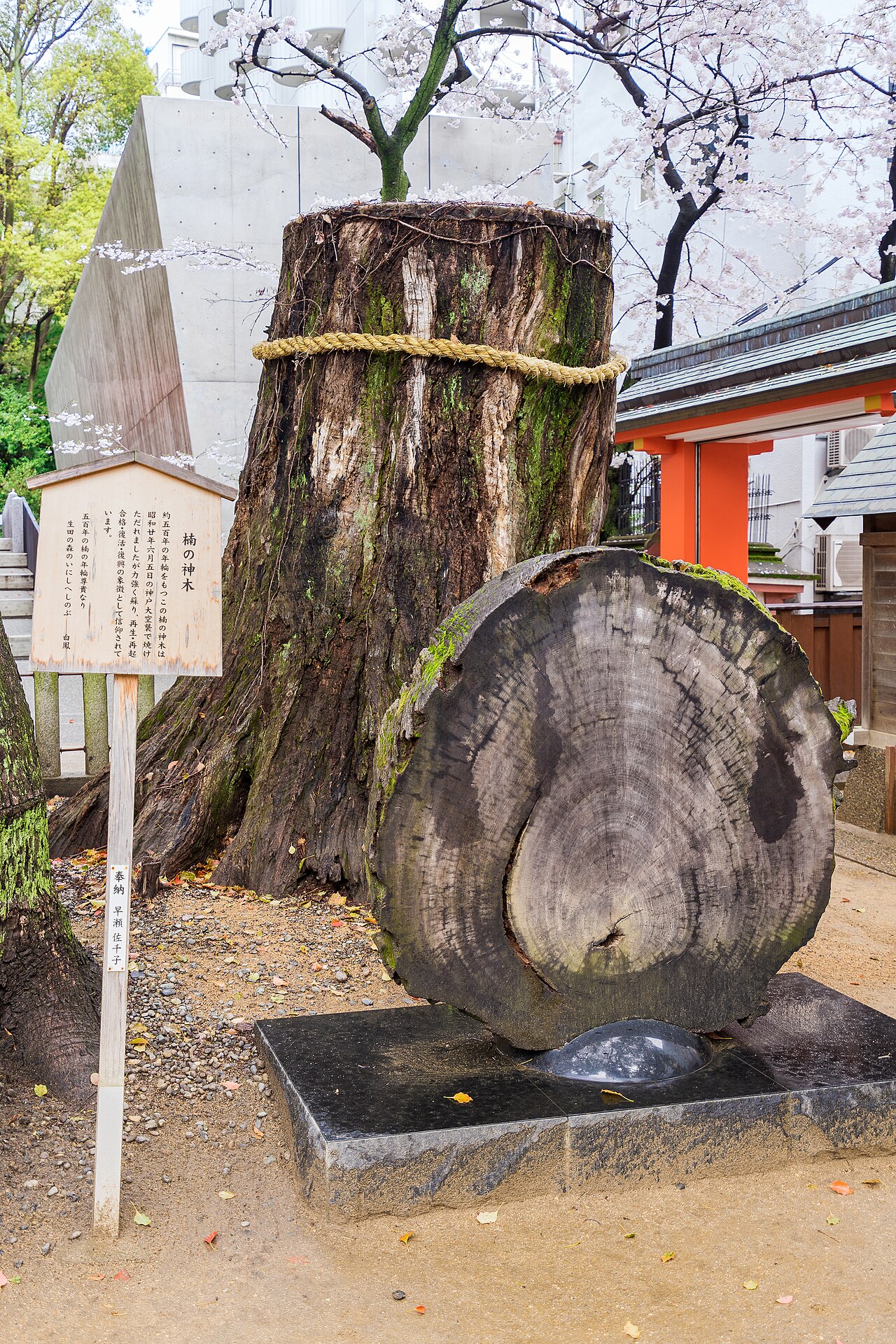
- The great camphor of the grounds, cut back and still putting out growth, with its cross-section displayed beside it
- Ikuta-no-Mori, the grove north of the halls, which appears in the Pillow Book and in tales of the 1184 battle of Ichi-no-Tani
- The pond in the grove, with Ichikishima Shrine and Ikuta-no-Mori-ni-Masu Shrine beside it
- Fifteen subordinate shrines within the grounds, none of which a visit requires
plan your visit
Visit facts for Ikuta Shrine
- Access
- About 180 minutes from Tokyo Station by Shinkansen to Shin-Kobe Station and the subway to Sannomiya, then about 10 minutes on foot north from JR Sannomiya or the private-railway Sannomiya stations. From Shin-Kobe it is about 20 minutes on foot south.
- Nearest station
- JR Sannomiya Station / Kobe-Sannomiya Station (private lines)
- Hours
- The official FAQ gives the gates as opening at 7:00 and closing around 17:00, or around 18:00 in summer. Tablets and amulets are given from 9:00 to 16:30 and prayer reception is from 9:30 to 16:00. Times change on festival days.
- Fees
- No admission fee for ordinary worship is published. An individual prayer service is from 10,000 yen and takes 15 to 20 minutes; the shrine does not take bookings from individuals. Parking is 200 yen for 15 minutes.
- Parking
- Available in Japanese only: 公式FAQは駐車場の入庫7:00〜22:00、出庫7:00〜24:00、0:00〜7:00は入出庫不可、15分200円と案内しています。平日の7:00〜18:00は最大2,000円で、18:00以降は通常料金が加算されます。時間外も料金が加算されるため、閉門・祭典・繁忙期の規制と満車を確認し、路上待機をしません。祈祷利用時は駐車券を受付へ持参します。
- Goshuin (seal stamps)
- A goshuin is given as a record of your visit, and limited designs appear for particular months and festivals. The current types, amounts and whether it is written in your book change through the year, so check the official notices.
- Typical visit
- About 75 minutes (Unmeguri's estimate, not an official figure)
- Facts checked
- 2026-10-22
background
Enshrined deity
Wakahirume-no-Mikoto
The shrine enshrines Wakahirume-no-Mikoto, related in the official guidance as the gentle spirit or the younger sister of Amaterasu Omikami: a young deity of the sun who weaves the garments of the gods in the sacred weaving hall, and who watches over the bringing forth and growth of all things. The link between thread and ties between people is how the shrine speaks of its faith.
etiquette
Visiting with respect
- Bow lightly once before passing through the torii gate, and rinse your hands at the water basin before approaching the hall.
- Do not touch, climb or lean on the great camphor, its roots, bark, cut surfaces, the displayed cross-section, the rope or the sign, and do not take bark or fallen branches away.
- The faith in ties between people is not a way to change another person’s consent, feelings or decisions; a refusal, a parting, or a wish for distance is to be respected.
- Prayers for a safe birth or for health do not take the place of antenatal checks, a diagnosis, treatment or a consultation; if you are unwell, come another day.
- In Ikuta-no-Mori keep to the paths, do not harm the trees, roots, moss, water or wildlife, and take nothing away with you.
- Do not photograph other worshippers, priests, children, votive tablets or written wishes without consent; follow the guidance posted on site.
- Visiting only the hall, without the grove, the water fortunes, the subordinate shrines or an amulet, is a complete visit.
- Hours, fees and reception can change; check the official information before you go.
faq
Common questions
How do I get to Ikuta Shrine?
About 180 minutes from Tokyo Station by Shinkansen to Shin-Kobe Station and the subway to Sannomiya, then about 10 minutes on foot north from JR Sannomiya or the private-railway Sannomiya stations. From Shin-Kobe it is about 20 minutes on foot south. Nearest station: JR Sannomiya Station / Kobe-Sannomiya Station (private lines).
How much does it cost to visit Ikuta Shrine?
No admission fee for ordinary worship is published. An individual prayer service is from 10,000 yen and takes 15 to 20 minutes; the shrine does not take bookings from individuals. Parking is 200 yen for 15 minutes.
What are the opening hours of Ikuta Shrine?
The official FAQ gives the gates as opening at 7:00 and closing around 17:00, or around 18:00 in summer. Tablets and amulets are given from 9:00 to 16:30 and prayer reception is from 9:30 to 16:00. Times change on festival days.
Is there parking at Ikuta Shrine?
Parking information for Ikuta Shrine is available in Japanese only: 公式FAQは駐車場の入庫7:00〜22:00、出庫7:00〜24:00、0:00〜7:00は入出庫不可、15分200円と案内しています。平日の7:00〜18:00は最大2,000円で、18:00以降は通常料金が加算されます。時間外も料金が加算されるため、閉門・祭典・繁忙期の規制と満車を確認し、路上待機をしません。祈祷利用時は駐車券を受付へ持参します。
How long should I spend at Ikuta Shrine?
Unmeguri's estimate for a visit is about 75 minutes. This is an editorial estimate, not an official figure.
Can I get a goshuin at Ikuta Shrine?
A goshuin is given as a record of your visit, and limited designs appear for particular months and festivals. The current types, amounts and whether it is written in your book change through the year, so check the official notices.
What is Ikuta Shrine known for?
It is known for enshrining Wakahirume-no-Mikoto, for the grove of Ikuta-no-Mori that appears in classical literature, and as the shrine that gave Kobe its name.
sources
Sources and checked dates
- 生田神社 公式サイト(opens in a new tab)
- 生田神社について(opens in a new tab)
- 生田神社 由緒(opens in a new tab)
- 生田神社 境内を歩く(opens in a new tab)
- 生田神社 ご祈祷(opens in a new tab)
- 生田神社 よくあるご質問(opens in a new tab)
- 生田神社 恋愛成就・良縁成就(opens in a new tab)
- 生田神社 お札・お守り(opens in a new tab)
- 令和8年7月の限定御朱印|生田神社(opens in a new tab)
- 御朱印 郵送授与終了のお知らせ|生田神社(opens in a new tab)
- 大海夏祭開催のご案内|生田神社(opens in a new tab)
- 安産祈願のご案内|生田神社(opens in a new tab)
- 生田神社|神戸公式観光サイト Feel KOBE(opens in a new tab)
- 名所めぐり 生田神社|兵庫県立歴史博物館(opens in a new tab)
- 配偶者等からの暴力の被害者への支援|内閣府男女共同参画局(opens in a new tab)
- 妊婦健診の検査|こども家庭庁(opens in a new tab)
Facts last checked on 2026-10-22. Sources are in Japanese. Unmeguri separates officially documented facts from its own editorial reading, and does not promise that any wish or outcome will be realized.