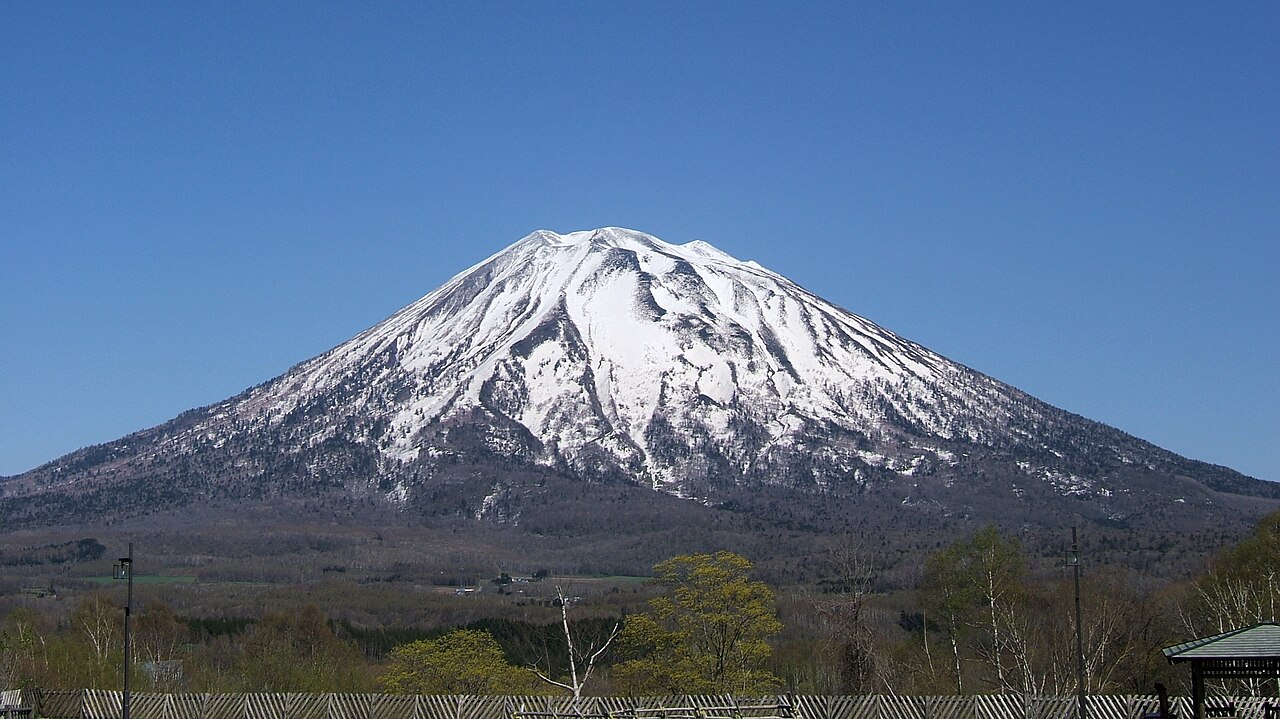
Mount Yotei (Ezo Fuji)
Yoteizan · Ezo Fuji · 羊蹄山
overview
What this place is
Mount Yotei stands alone in Kyogoku Town, Hokkaido, its cone giving it the name Ezo Fuji. It has a crater at the top, alpine plants on its upper slopes, forest below, and spring water at its foot. Kutchan Town advises allowing more than eight hours for the climb.
- A single cone that gives the mountain the name Ezo Fuji
- A crater at the top of the mountain
- Alpine plants on the upper slopes and forest below
- Spring water at the foot of the mountain
plan your visit
Visit facts for Mount Yotei (Ezo Fuji)
- Access
- About 25 minutes by car from around Kutchan or Kyogoku to a trailhead. Each route has its own trailhead, so plan your transfer and your transport after descending separately.
- Nearest station
- JR Kutchan Station (then by car to a trailhead)
- Hours
- Trail conditions depend on the weather. In June 2026 a brown bear was reported on the Kyogoku route. Check remaining snow, the weather, conditions around the crater, and the climbing notification on the day.
- Fees
- There is no entry fee, but transport, equipment, and insurance are separate. Seeing the mountain from the surrounding area, without climbing, is also a way to visit.
- Parking
- Available in Japanese only: 各登山口の指定駐車場を利用。路上駐車、夜間の騒音、私有地への進入を避けます。
- Typical visit
- About 600 minutes (Unmeguri's estimate, not an official figure)
- Facts checked
- 2026-10-22
background
Central feature
The single cone · The summit crater
Official tourism information describes the cone-shaped mountain that gives Yotei the name Ezo Fuji.
etiquette
Visiting with respect
- Kutchan Town advises allowing more than eight hours for the climb. Seeing the mountain from around it and climbing it for a full day are different experiences.
- Kutchan Town publishes brown bear sightings on the climbing routes on an ongoing basis. Check before you set out.
- The trail involves long hours, height gain, and exposure to bad weather, and is not suited to wheelchairs or strollers.
- Hours, fees and reception can change; check the official information before you go.
faq
Common questions
How do I get to Mount Yotei (Ezo Fuji)?
About 25 minutes by car from around Kutchan or Kyogoku to a trailhead. Each route has its own trailhead, so plan your transfer and your transport after descending separately. Nearest station: JR Kutchan Station (then by car to a trailhead).
How much does it cost to visit Mount Yotei (Ezo Fuji)?
There is no entry fee, but transport, equipment, and insurance are separate. Seeing the mountain from the surrounding area, without climbing, is also a way to visit.
What are the opening hours of Mount Yotei (Ezo Fuji)?
Trail conditions depend on the weather. In June 2026 a brown bear was reported on the Kyogoku route. Check remaining snow, the weather, conditions around the crater, and the climbing notification on the day.
Is there parking at Mount Yotei (Ezo Fuji)?
Parking information for Mount Yotei (Ezo Fuji) is available in Japanese only: 各登山口の指定駐車場を利用。路上駐車、夜間の騒音、私有地への進入を避けます。
How long should I spend at Mount Yotei (Ezo Fuji)?
Unmeguri's estimate for a visit is about 600 minutes. This is an editorial estimate, not an official figure.
How long does it take to climb Mount Yotei?
Kutchan Town advises allowing more than eight hours.
Are there bears on the mountain?
Kutchan Town publishes brown bear sightings on the climbing routes on an ongoing basis, including a sighting on the Kyogoku route in June 2026. Check the current notices before you set out.
Is there a fee to climb?
There is no entry fee. Transport, equipment, and insurance are separate costs.
Can I visit without climbing?
Yes. Seeing the mountain from the surrounding area is also a way to visit, and takes far less time and equipment.
sources
Sources and checked dates
- 羊蹄山|北海道観光公式サイト(opens in a new tab)
- 羊蹄山登山・ヒグマ等の最新情報|倶知安町(opens in a new tab)
- 羊蹄山登山Q&A|倶知安町(opens in a new tab)
- 羊蹄山登山届|倶知安町(opens in a new tab)
- 羊蹄山の自然・登山情報|環境省北海道地方環境事務所(opens in a new tab)
- 羊蹄山|多言語解説データベース(opens in a new tab)
Facts last checked on 2026-10-22. Sources are in Japanese. Unmeguri separates officially documented facts from its own editorial reading, and does not promise that any wish or outcome will be realized.