Itsukushima Jinja Shrine
嚴島神社 · Itsukushima Shrine · Miyajima Shrine
overview
What this place is
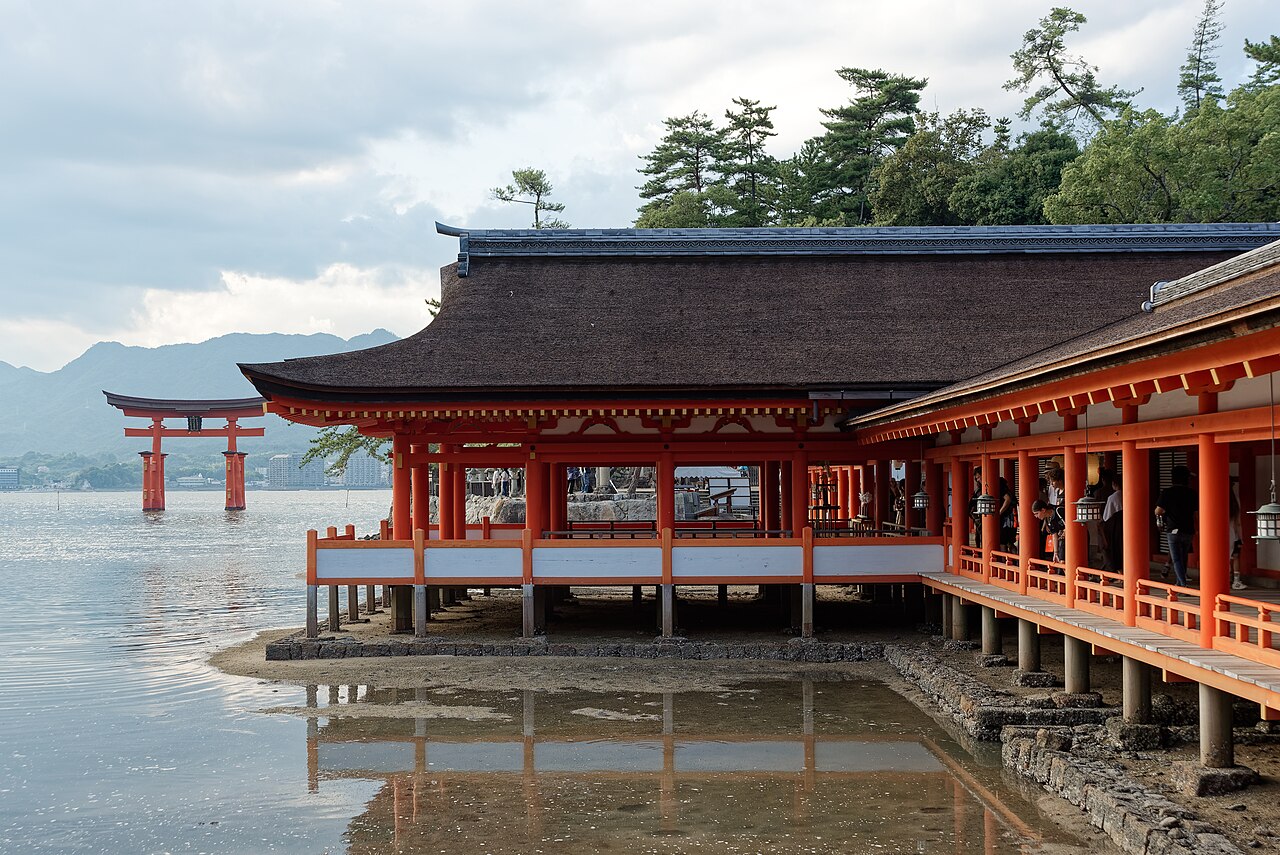
Itsukushima Jinja is a Shinto shrine on the island of Miyajima in Hatsukaichi, Hiroshima, whose halls and vermilion corridors stand over the sea, so that the shrine appears to float at high tide. Tradition holds that it was founded in 593, and the shrine buildings in their present form date from a rebuilding in 1168 associated with Taira no Kiyomori. Inscribed as a UNESCO World Heritage Site in 1996, it has long been revered as a guardian of safety at sea.
- Shrine halls and corridors built over the sea, whose appearance changes with the rise and fall of the tide
- The Otorii, the great torii gate standing in the sea in front of the shrine
- An official one-way worship route along the vermilion corridors, from the east corridor to the main shrine and out through the west corridor
- A UNESCO World Heritage Site since 1996, set against the sacred Mount Misen
plan your visit
Visit facts for Itsukushima Jinja Shrine
- Access
- From Miyajimaguchi Station on the JR Sanyo Line, walk about 6 minutes to the pier, take the ferry for about 10 minutes to Miyajima Pier, then walk about 15 minutes to the shrine entrance.
- Nearest station
- Miyajima Pier (ferry from Miyajimaguchi Station)
- Hours
- The shrine is open year-round. Official closing times change by season — for example 18:00 from March 1 to October 14, 17:30 from October 15 to November 30, and 17:00 in December — with separate hours at New Year, so check the official information, tide levels, and ferry schedules before you visit.
- Fees
- Admission to the shrine is 300 yen for adults, 200 yen for high school students, and 100 yen for elementary and junior high school students, according to the official guide. The treasure hall, the Senjokaku pavilion, and prayer services are charged separately.
- Parking
- Available in Japanese only: 島内へ自家用車を持ち込まず、宮島口側の公式駐車情報と公共交通を優先します。繁忙期の臨時規制を確認します。
- Typical visit
- About 75 minutes (Unmeguri's estimate, not an official figure)
- Facts checked
- 2026-10-22
background
Enshrined deities
Ichikishimahime-no-Mikoto · Tagorihime-no-Mikoto · Tagitsuhime-no-Mikoto
The shrine's official history explains that Itsukushima Jinja enshrines the three Munakata goddesses and has long been revered as a guardian deity of the sea, as well as for the peace of the imperial house and the protection of the nation.
etiquette
Visiting with respect
- Follow the official one-way worship route from the east corridor to the main shrine and out through the west corridor, without doubling back or entering restricted areas.
- Do not touch the corridors, shrine buildings, or the Otorii; even when the tide is out, check the on-site guidance before stepping onto the tidal flats.
- Do not feed the wild deer of Miyajima, and keep food and paper items out of their reach so that the worship route stays clear.
- The common way to pray at a shrine is two bows, two claps, and one final bow.
- Hours, fees and reception can change; check the official information before you go.
faq
Common questions
How do I get to Itsukushima Jinja Shrine?
From Miyajimaguchi Station on the JR Sanyo Line, walk about 6 minutes to the pier, take the ferry for about 10 minutes to Miyajima Pier, then walk about 15 minutes to the shrine entrance. Nearest station: Miyajima Pier (ferry from Miyajimaguchi Station).
How much does it cost to visit Itsukushima Jinja Shrine?
Admission to the shrine is 300 yen for adults, 200 yen for high school students, and 100 yen for elementary and junior high school students, according to the official guide. The treasure hall, the Senjokaku pavilion, and prayer services are charged separately.
What are the opening hours of Itsukushima Jinja Shrine?
The shrine is open year-round. Official closing times change by season — for example 18:00 from March 1 to October 14, 17:30 from October 15 to November 30, and 17:00 in December — with separate hours at New Year, so check the official information, tide levels, and ferry schedules before you visit.
Is there parking at Itsukushima Jinja Shrine?
Parking information for Itsukushima Jinja Shrine is available in Japanese only: 島内へ自家用車を持ち込まず、宮島口側の公式駐車情報と公共交通を優先します。繁忙期の臨時規制を確認します。
How long should I spend at Itsukushima Jinja Shrine?
Unmeguri's estimate for a visit is about 75 minutes. This is an editorial estimate, not an official figure.
Can I walk out toward the great torii gate at low tide?
The view of the Otorii changes with the tide, and at low tide the flats in front of the shrine may be exposed. Whether you can walk out depends on tide levels and the on-site safety guidance, so follow the instructions given on the day.
What is Itsukushima Jinja Shrine known for?
It is known for its shrine halls and corridors built over the sea, the great torii gate standing in the water, and its inscription as a UNESCO World Heritage Site in 1996.
sources
Sources and checked dates
- 御祭神・御由緒|嚴島神社(opens in a new tab)
- 拝観施設・時間・料金|嚴島神社(opens in a new tab)
- 参拝順路|嚴島神社(opens in a new tab)
- ご祈祷|嚴島神社(opens in a new tab)
- 嚴島神社|ひろしま公式観光サイト(opens in a new tab)
Facts last checked on 2026-10-22. Sources are in Japanese. Unmeguri separates officially documented facts from its own editorial reading, and does not promise that any wish or outcome will be realized.