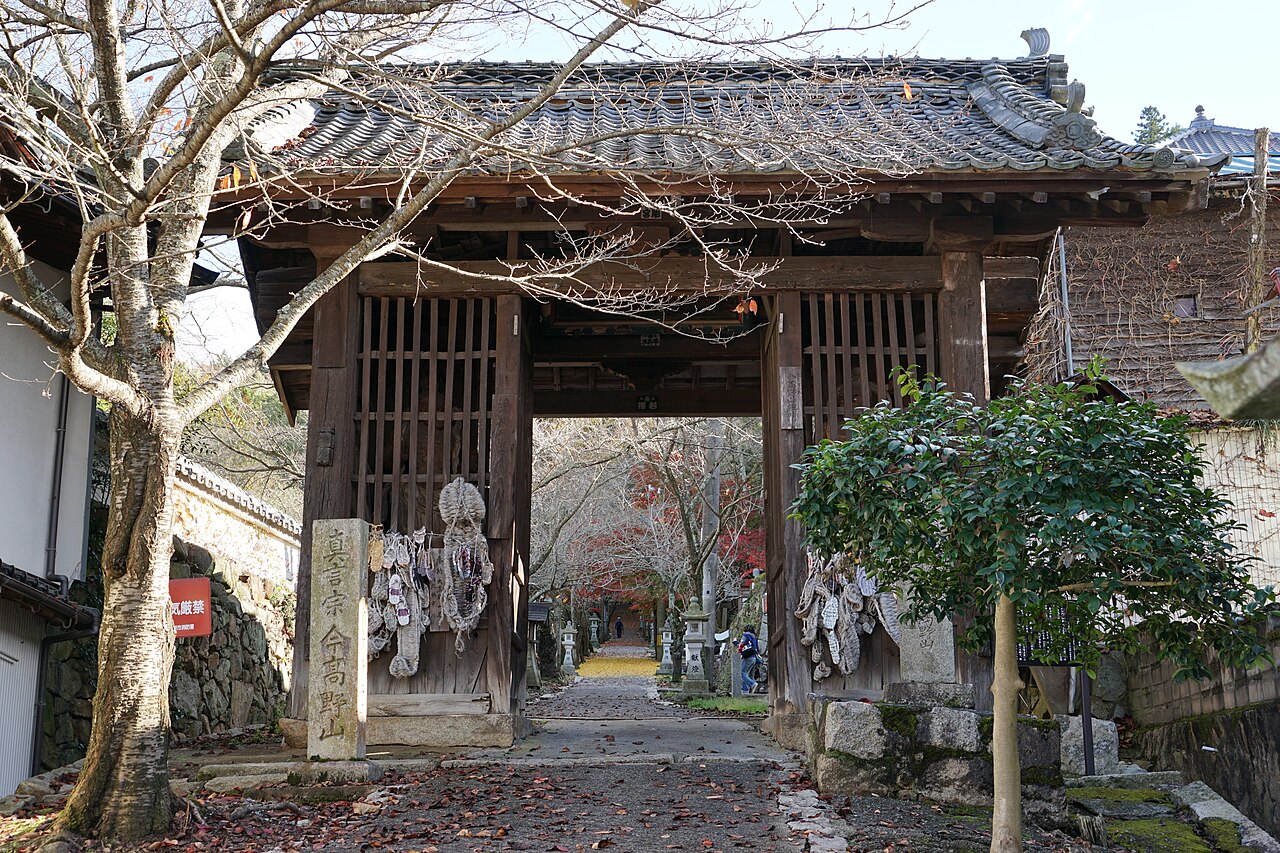
Imakoyasan (Ryugeji Temple and Nyu Shrine)
Imakoyasan · Ryugeji · Nyu Jinja · 今高野山
overview
What this place is
Imakoyasan is a historic site in Kozan, Sera Town, Hiroshima, where Ryugeji Temple and Nyu Shrine stand within the same grounds and preserve the older Japanese pattern of Buddhism and Shinto practised together. A pond called Kami-no-ike and the vermilion Kami-no-hashi bridge form part of the site, and a mountain path of 88 stone Buddhas runs behind it.
- Ryugeji Temple and Nyu Shrine standing within one historic site
- Kami-no-ike pond and the vermilion Kami-no-hashi bridge
- Cherry blossom in spring and maples in autumn
- A mountain path lined with 88 stone Buddhas
plan your visit
Visit facts for Imakoyasan (Ryugeji Temple and Nyu Shrine)
- Access
- About 10 minutes on foot from the Kozan bus depot. Check bus times from Mihara or Onomichi and your return connection first. By car it is about 7 minutes from the Sera interchange.
- Nearest station
- Kozan bus depot (Chugoku Bus)
- Hours
- Prefectural tourism information lists the site as open at all times, but the temple halls, Nyu Shrine, the cafe, the fire-walking rite, the opening of the Eleven-headed Kannon, and the 88-station pilgrimage each have their own conditions. Check event dates and what is open on the day.
- Fees
- Public tourism information states that walking the grounds is free. Events, entry to the halls, activities, food, and temple seals are charged or arranged separately.
- Parking
- Available in Japanese only: 普通車33台の無料駐車場案内があります。桜・紅葉・行事日は混雑と交通誘導を優先します。
- Typical visit
- About 80 minutes (Unmeguri's estimate, not an official figure)
- Facts checked
- 2026-10-22
background
Central feature
Ryugeji Temple and Nyu Shrine · Kami-no-ike pond
A temple and a shrine stand within the same historic site here, preserving the older Japanese pattern in which Buddhist and Shinto practice were combined. A tradition dates the founding to 822, recorded in temple histories that survive from 1709 onward.
etiquette
Visiting with respect
- The flat grounds, the halls, the Kojoyama viewpoint, and the roughly 90-minute stone Buddha circuit are separate levels of effort. It is fine to stay around Kami-no-ike and finish there.
- Keep your voice down around the halls, especially while a service is in progress.
- Follow on-site signs about photography and about which areas are open.
- Hours, fees and reception can change; check the official information before you go.
faq
Common questions
How do I get to Imakoyasan (Ryugeji Temple and Nyu Shrine)?
About 10 minutes on foot from the Kozan bus depot. Check bus times from Mihara or Onomichi and your return connection first. By car it is about 7 minutes from the Sera interchange. Nearest station: Kozan bus depot (Chugoku Bus).
How much does it cost to visit Imakoyasan (Ryugeji Temple and Nyu Shrine)?
Public tourism information states that walking the grounds is free. Events, entry to the halls, activities, food, and temple seals are charged or arranged separately.
What are the opening hours of Imakoyasan (Ryugeji Temple and Nyu Shrine)?
Prefectural tourism information lists the site as open at all times, but the temple halls, Nyu Shrine, the cafe, the fire-walking rite, the opening of the Eleven-headed Kannon, and the 88-station pilgrimage each have their own conditions. Check event dates and what is open on the day.
Is there parking at Imakoyasan (Ryugeji Temple and Nyu Shrine)?
Parking information for Imakoyasan (Ryugeji Temple and Nyu Shrine) is available in Japanese only: 普通車33台の無料駐車場案内があります。桜・紅葉・行事日は混雑と交通誘導を優先します。
How long should I spend at Imakoyasan (Ryugeji Temple and Nyu Shrine)?
Unmeguri's estimate for a visit is about 80 minutes. This is an editorial estimate, not an official figure.
Why are a temple and a shrine on the same site?
Imakoyasan preserves the older Japanese pattern in which Buddhist and Shinto practice were carried out together, so Ryugeji Temple and Nyu Shrine remain within one historic site.
How long is the stone Buddha circuit?
The path of 88 stone Buddhas takes roughly 90 minutes. You do not need to walk it; staying around Kami-no-ike is a complete visit.
sources
Sources and checked dates
- 今高野山縁起など|世羅町(opens in a new tab)
- 今高野山の歴史と文化|世羅町(opens in a new tab)
- 今高野山緑地環境保全地域|広島県(opens in a new tab)
- 今高野山(龍華寺・丹生神社)|ひろしま公式観光サイト(opens in a new tab)
Facts last checked on 2026-10-22. Sources are in Japanese. Unmeguri separates officially documented facts from its own editorial reading, and does not promise that any wish or outcome will be realized.