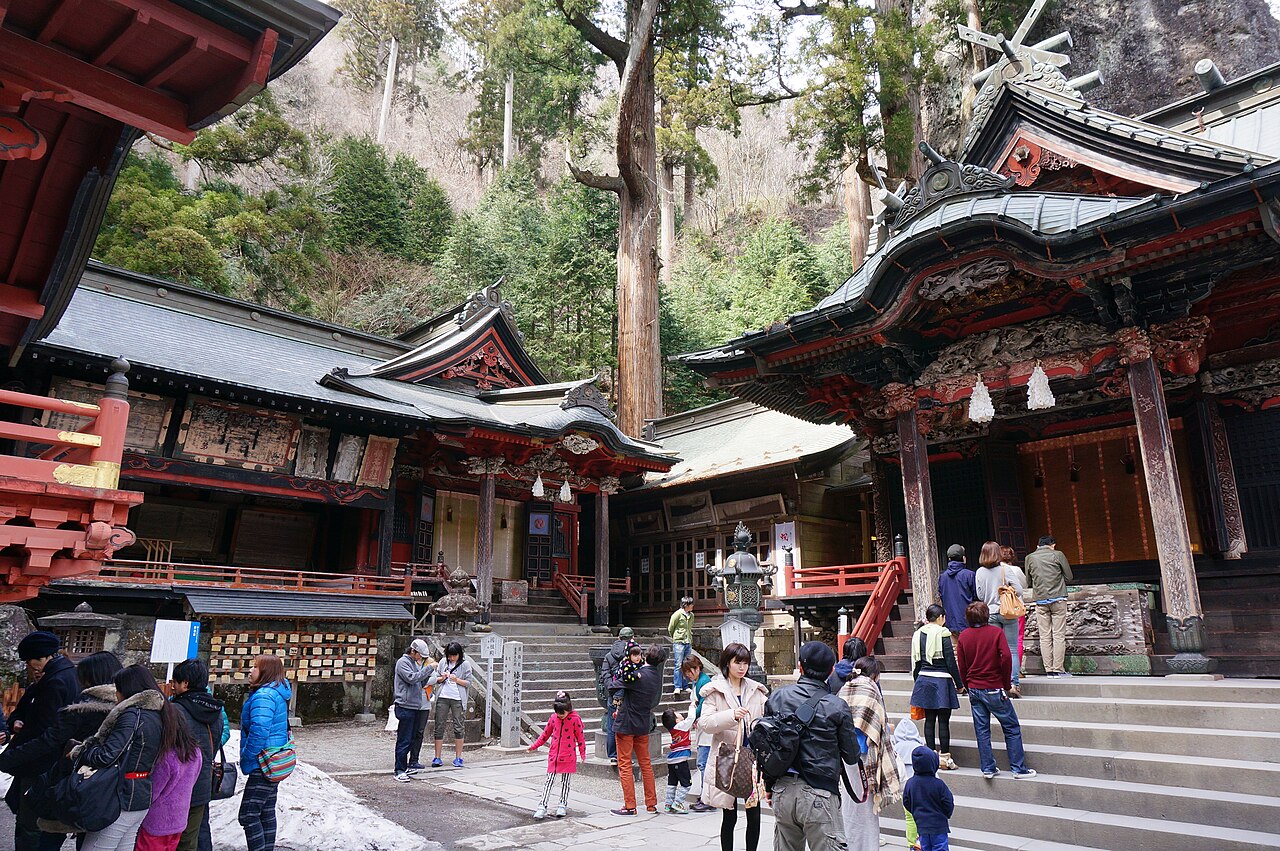
Haruna Shrine
Haruna Jinja · Harunasan Shrine · 榛名神社
overview
What this place is
Haruna Shrine in Takasaki is one of the twelve shrines of Kozuke listed in the Engishiki of 927, and carries both the Haruna following and a regard for the mountain as a source of water. Homusubi-no-Kami and Haniyamahime-no-Kami are enshrined here. The halls of 1806 stand against the Misugata rock, with a cave within it kept as the main hall itself.
- Halls of 1806 built against the Misugata rock, with the cave within as the main hall
- One of the twelve shrines of Kozuke listed in the Engishiki of 927
- A following that spread across the Kanto plain after a revival in the Edo period
- An approach of about 700 metres, climbing from the entrance to the halls
plan your visit
Visit facts for Haruna Shrine
- Access
- About 125 minutes from Tokyo Station by Shinkansen to Takasaki, then a bus for Lake Haruna from the west exit to the Haruna Jinja-mae stop and about 15 minutes on foot. Check the timetable and the way back before you board.
- Nearest station
- Haruna Jinja-mae bus stop / JR Takasaki Station
- Hours
- 7:00 to 18:00 from 1 April to 30 September, and 7:00 to 17:00 from 1 October to 31 March. Festivals and weather change some days, so check the shrine’s notice for the day.
- Fees
- Visiting the grounds is free. Prayers, amulets, tablets and goshuin are separate.
- Parking
- Available in Japanese only: 高崎市は周辺に駐車場ありと案内していますが、台数・料金・混雑時の利用条件は当日確認。満車時は路上待機せず、係員と現地表示に従う。
- Goshuin (seal stamps)
- Goshuin are given within the visiting hours. Confirm the desk and the current types on the day.
- Typical visit
- About 100 minutes (Unmeguri's estimate, not an official figure)
- Facts checked
- 2026-07-29
background
Enshrined deities
Homusubi-no-Kami · Haniyamahime-no-Kami
The city of Takasaki explains that Homusubi-no-Kami and Haniyamahime-no-Kami are enshrined here and that the shrine has long been revered for the harvest, for holding back fire and for fortune. The Haruna following also carries a tradition of praying for rain with water from the shrine.
etiquette
Visiting with respect
- It is about 15 minutes on foot from the bus stop to the entrance, and about 700 metres of climbing approach and steps beyond; no continuous wheelchair route is described, so ask the shrine what help is possible and how far you can go.
- Reaching the entrance is a complete visit; the halls are a further choice.
- The rock and the cave within it are the shrine itself; do not touch or climb on them.
- Follow the notices on photography along the approach.
- Check the weather before you go, as the approach runs beside water.
- Hours, fees and reception can change; check the official information before you go.
faq
Common questions
How do I get to Haruna Shrine?
About 125 minutes from Tokyo Station by Shinkansen to Takasaki, then a bus for Lake Haruna from the west exit to the Haruna Jinja-mae stop and about 15 minutes on foot. Check the timetable and the way back before you board. Nearest station: Haruna Jinja-mae bus stop / JR Takasaki Station.
How much does it cost to visit Haruna Shrine?
Visiting the grounds is free. Prayers, amulets, tablets and goshuin are separate.
What are the opening hours of Haruna Shrine?
7:00 to 18:00 from 1 April to 30 September, and 7:00 to 17:00 from 1 October to 31 March. Festivals and weather change some days, so check the shrine’s notice for the day.
Is there parking at Haruna Shrine?
Parking information for Haruna Shrine is available in Japanese only: 高崎市は周辺に駐車場ありと案内していますが、台数・料金・混雑時の利用条件は当日確認。満車時は路上待機せず、係員と現地表示に従う。
How long should I spend at Haruna Shrine?
Unmeguri's estimate for a visit is about 100 minutes. This is an editorial estimate, not an official figure.
Can I get a goshuin at Haruna Shrine?
Goshuin are given within the visiting hours. Confirm the desk and the current types on the day.
How long is the approach?
About 700 metres of climbing approach and steps from the entrance, which is itself about 15 minutes on foot from the bus stop.
What is the Misugata rock?
The rock the halls of 1806 are built against, with a cave within it kept as the main hall where the deity is enshrined.
sources
Sources and checked dates
- 巌山へようこそ|榛名神社(opens in a new tab)
- 歴史|榛名神社(opens in a new tab)
- 境内|榛名神社(opens in a new tab)
- 祭儀|榛名神社(opens in a new tab)
- 交通案内|榛名神社(opens in a new tab)
- お知らせ・参拝案内|榛名神社(opens in a new tab)
- 参道休憩所のご案内|榛名神社(opens in a new tab)
- 令和8年1月3日朝の道路状況|榛名神社(opens in a new tab)
- 榛名神社|高崎市観光情報(opens in a new tab)
- 榛名神社|高崎市文化財情報(opens in a new tab)
- 榛名歴史民俗資料館の常設展示|高崎市(opens in a new tab)
Facts last checked on 2026-07-29. Sources are in Japanese. Unmeguri separates officially documented facts from its own editorial reading, and does not promise that any wish or outcome will be realized.