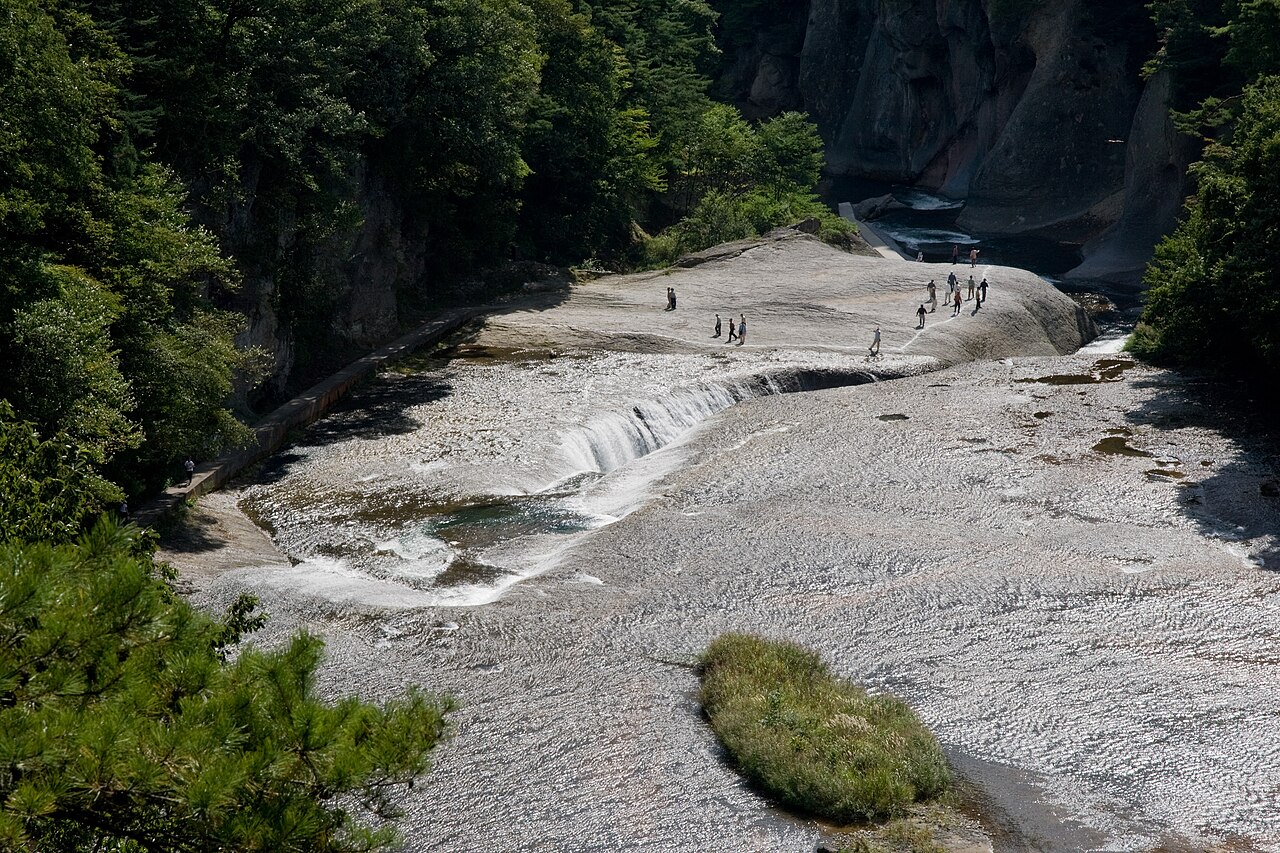
Fukiware Falls
Fukiware-no-taki · Fukiware Gorge · 吹割の滝
overview
What this place is
Fukiware Falls in Numata is a split in the rock bed 7 metres high and 30 metres wide, worn over some ten thousand years as the Katashina river cut away the softer tuff, so that the rock looks as though it had been blown apart. Water falls into the cleft rather than over a lip, wearing the bed into a U, which is rare in Japan. It was designated a natural monument and place of scenic beauty on 16 December 1936.
- A cleft 7 metres high and 30 metres wide, cut into the river bed
- Water falling into the bed and wearing it into a U, rare in Japan
- Designated a natural monument and place of scenic beauty in 1936
- The Senjojiki, the pot-holes and the Hannya rock nearby
plan your visit
Visit facts for Fukiware Falls
- Access
- About 140 minutes from Tokyo Station by Shinkansen to Jomo-Kogen Station and about 70 minutes by local bus; about 40 minutes by bus from Numata Station. Check the times and the way back with Kan-etsu Kotsu on the day.
- Nearest station
- Fukiware-no-taki bus stop / JR Numata or JR Jomo-Kogen Station
- Hours
- The path reopened in full on 16 April 2026, but rain and snowmelt can close it again. It usually closes for winter from mid-December to late March, and at night.
- Fees
- There is no charge to see the falls. Parking, transport and the shops are separate.
- Parking
- Available in Japanese only: 吹割大橋手前の信号右側に市営無料駐車場約10台。周辺の民間駐車場は無料、有料、商品券購入方式があるため、駐車前に看板と利用条件を確認。
- Typical visit
- About 75 minutes (Unmeguri's estimate, not an official figure)
- Facts checked
- 2026-10-22
background
Central feature
the Katashina river falling into the cleft in the bed · the U-shaped cut of the Fukiware fall · the tuff of the Fukiware gorge
The city of Numata explains that the Katashina river wore away the softer tuff to leave many clefts, so that the great rock looks as though it had been blown apart, and that the Fukiware fall cuts the bed into a U, which is rare in Japan.
etiquette
Visiting with respect
- The riverside path has narrow sections, slippery rock and steps, and some places are left without railings to keep the view; no continuous wheelchair route is described, so ask the city’s tourism section how far you can go.
- Keep back from the cleft and do not step onto the wet rock towards it.
- The tale of the pool leading to the dragon palace is a local story; do not throw letters or objects into the river.
- Check whether the path is open before you set out, and do not go at night.
- Take nothing from the gorge and carry out what you bring in.
- Hours, fees and reception can change; check the official information before you go.
faq
Common questions
How do I get to Fukiware Falls?
About 140 minutes from Tokyo Station by Shinkansen to Jomo-Kogen Station and about 70 minutes by local bus; about 40 minutes by bus from Numata Station. Check the times and the way back with Kan-etsu Kotsu on the day. Nearest station: Fukiware-no-taki bus stop / JR Numata or JR Jomo-Kogen Station.
How much does it cost to visit Fukiware Falls?
There is no charge to see the falls. Parking, transport and the shops are separate.
What are the opening hours of Fukiware Falls?
The path reopened in full on 16 April 2026, but rain and snowmelt can close it again. It usually closes for winter from mid-December to late March, and at night.
Is there parking at Fukiware Falls?
Parking information for Fukiware Falls is available in Japanese only: 吹割大橋手前の信号右側に市営無料駐車場約10台。周辺の民間駐車場は無料、有料、商品券購入方式があるため、駐車前に看板と利用条件を確認。
How long should I spend at Fukiware Falls?
Unmeguri's estimate for a visit is about 75 minutes. This is an editorial estimate, not an official figure.
How big is Fukiware Falls?
The cleft in the rock bed is 7 metres high and 30 metres wide, worn over some ten thousand years.
Is the path open?
It reopened in full on 16 April 2026, but rain and snowmelt can close it again, and it shuts for winter from mid-December to late March.
sources
Sources and checked dates
- 吹割の滝の紹介|沼田市(opens in a new tab)
- 吹割の滝遊歩道の全面開通について|沼田市(opens in a new tab)
- 吹割の滝 よくあるご質問|沼田市(opens in a new tab)
- 吹割の滝 見所案内|沼田市(opens in a new tab)
- 吹割渓ならびに吹割瀑|沼田市文化財情報(opens in a new tab)
- 吹割の滝へのアクセス方法|沼田市(opens in a new tab)
- 吹割の滝周辺駐車場の利用にあたって|沼田市(opens in a new tab)
- 吹割の滝周辺でのクマの出没|沼田市(opens in a new tab)
- SNS等の投稿について|沼田市(opens in a new tab)
- スマートフォン等携帯端末をご利用の方へ|沼田市(opens in a new tab)
- 吹割の滝|沼田市観光協会(opens in a new tab)
Facts last checked on 2026-10-22. Sources are in Japanese. Unmeguri separates officially documented facts from its own editorial reading, and does not promise that any wish or outcome will be realized.