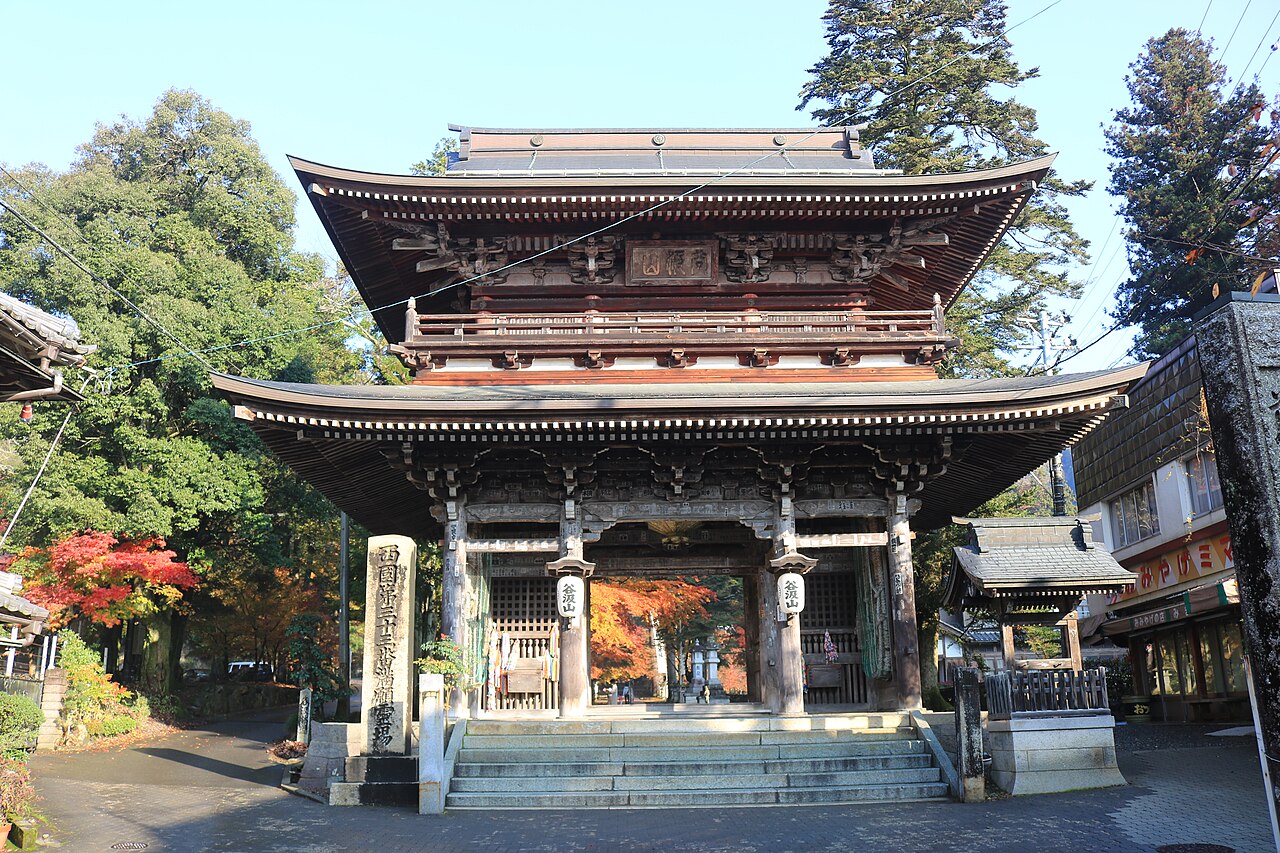
Tanigumisan Kegonji Temple
Kegon-ji · Tanigumi-san · 谷汲山 華厳寺
overview
What this place is
Kegonji in Ibigawa is the thirty-third and last of the Saigoku pilgrimage temples, and the only one of the thirty-three in Gifu Prefecture. Its principal image is the Eleven-headed Kannon. The town relates a founding in 798 and a long standing as the temple where the Kannon pilgrimage is completed, where pilgrims recite three verses in turn at the main hall, the Oizuru hall and the Mangan hall.
- The thirty-third and final temple of the Saigoku Kannon pilgrimage
- The only one of the thirty-three temples in Gifu Prefecture
- Three verses recited in turn at the main hall, the Oizuru hall and the Mangan hall
- A long approach from the gate up to the main hall, lined with shops
plan your visit
Visit facts for Tanigumisan Kegonji Temple
- Access
- About 65 minutes from JR Ogaki Station, changing between the Tarumi Railway and local buses, then about 10 minutes on foot from the Tanigumisan stop. Check which days the services run and when the last one leaves.
- Nearest station
- Tanigumisan stop (Ibigawa town community bus)
- Hours
- Visiting is generally 8:00 to 16:30. For the sutra desk, prayers and the dark passage below the hall, check the notices on the spot and the temple’s own information.
- Fees
- Entry is free. The dark passage, prayers, the sutra inscription and amulets are charged separately or given as an offering.
- Parking
- Available in Japanese only: 町営駐車場の利用日、料金、混雑を確認し、門前の生活道路へ駐車しません。
- Goshuin (seal stamps)
- The sutra desk issues goshuin; the halls that issue them and their hours differ, so check on the spot.
- Typical visit
- About 90 minutes (Unmeguri's estimate, not an official figure)
- Facts checked
- 2026-10-22
background
Principal image
Eleven-headed Kannon
Ibigawa town describes Kegonji as the thirty-third temple of the Saigoku pilgrimage, the only one of the thirty-three in Gifu Prefecture, and gives its principal image as the Eleven-headed Kannon.
etiquette
Visiting with respect
- It is a distance from the gate to the main hall, with steps along the way; turning back partway is a complete visit.
- Being the thirty-third temple does not make it the required end of anything; visit it in whatever order suits you.
- The three verses are the temple’s practice, not a task to be completed for a record.
- Follow the notices on photography and do not touch the halls or the images.
- Check the last bus before you climb, as services are infrequent.
- Hours, fees and reception can change; check the official information before you go.
faq
Common questions
How do I get to Tanigumisan Kegonji Temple?
About 65 minutes from JR Ogaki Station, changing between the Tarumi Railway and local buses, then about 10 minutes on foot from the Tanigumisan stop. Check which days the services run and when the last one leaves. Nearest station: Tanigumisan stop (Ibigawa town community bus).
How much does it cost to visit Tanigumisan Kegonji Temple?
Entry is free. The dark passage, prayers, the sutra inscription and amulets are charged separately or given as an offering.
What are the opening hours of Tanigumisan Kegonji Temple?
Visiting is generally 8:00 to 16:30. For the sutra desk, prayers and the dark passage below the hall, check the notices on the spot and the temple’s own information.
Is there parking at Tanigumisan Kegonji Temple?
Parking information for Tanigumisan Kegonji Temple is available in Japanese only: 町営駐車場の利用日、料金、混雑を確認し、門前の生活道路へ駐車しません。
How long should I spend at Tanigumisan Kegonji Temple?
Unmeguri's estimate for a visit is about 90 minutes. This is an editorial estimate, not an official figure.
Can I get a goshuin at Tanigumisan Kegonji Temple?
The sutra desk issues goshuin; the halls that issue them and their hours differ, so check on the spot.
Why is Kegonji the thirty-third temple?
It is the last of the Saigoku Kannon pilgrimage and the only one of the thirty-three temples in Gifu Prefecture.
sources
Sources and checked dates
Facts last checked on 2026-10-22. Sources are in Japanese. Unmeguri separates officially documented facts from its own editorial reading, and does not promise that any wish or outcome will be realized.