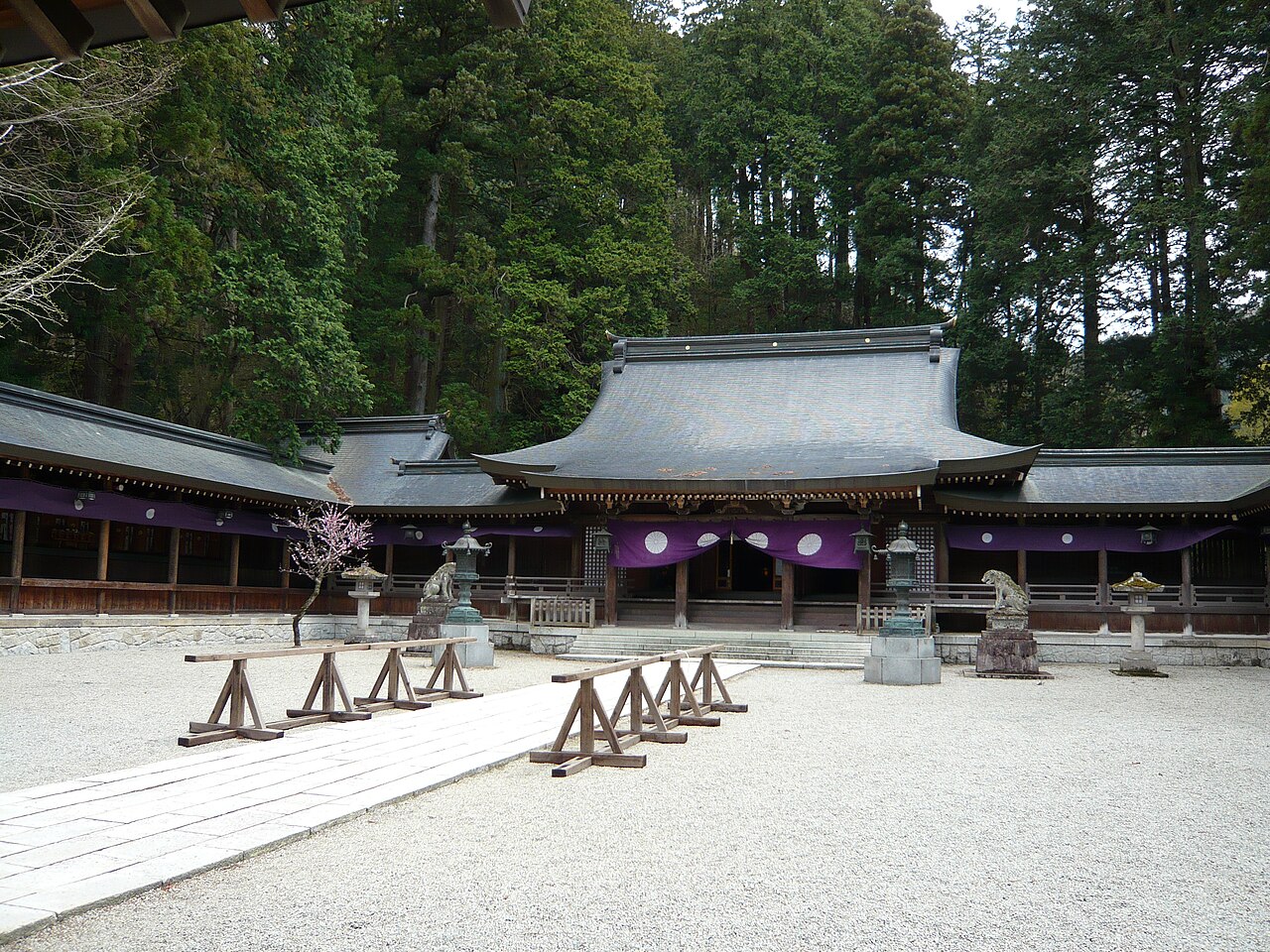
Hida Ichinomiya Minashi Shrine
Minashi Jinja · Hida Ichinomiya · 飛驒一宮 水無神社
overview
What this place is
Minashi Shrine in Takayama is the first shrine of Hida province and the foremost of its eight shrines of the old register. Mount Kurai behind it is the shrine’s sacred mountain, standing on the watershed at the head of the Miyagawa and Hidagawa rivers, and the deity is called Minashi-no-Okami, taken together with the deities of Hida as a whole. Its May festival keeps rites such as the tokeiraku, the lion dance and the jindai odori.
- Mount Kurai, the sacred mountain at the watershed above two river systems
- The foremost of the eight shrines of Hida in the old register
- The May festival, with the tokeiraku, the lion dance and the jindai odori
- A shrine within walking distance of Hida-Ichinomiya Station
plan your visit
Visit facts for Hida Ichinomiya Minashi Shrine
- Access
- About 15 minutes from JR Takayama Station on the Takayama Main Line to Hida-Ichinomiya Station, then about 8 minutes on foot. Trains are not frequent, so check the return service first.
- Nearest station
- Hida-Ichinomiya Station (JR Takayama Main Line)
- Hours
- Tablets, amulets and goshuin are received from 8:30 to 16:30. For prayer reception and festival days, check the shrine’s own information.
- Fees
- An ordinary visit is free. Prayers, tablets, amulets and goshuin carry their own offerings.
- Parking
- Available in Japanese only: 例祭・生きびな祭・初詣時は交通規制と臨時駐車場を確認します。
- Goshuin (seal stamps)
- Goshuin are received from 8:30 to 16:30 along with tablets and amulets. Festival days can change reception.
- Typical visit
- About 55 minutes (Unmeguri's estimate, not an official figure)
- Facts checked
- 2026-10-22
background
Enshrined deity
Minashi-no-Okami (Mitoshi-no-Kami and the deities of Hida)
The shrine describes Mount Kurai as its sacred mountain, standing at the head of the Miyagawa and Hidagawa rivers and on the watershed between them, and relates the many aspects of Minashi-no-Okami.
etiquette
Visiting with respect
- The shrine is walkable from the station, but snow changes the surface; check the steps in the grounds and how far the snow has been cleared.
- Mount Kurai is the sacred mountain, not a route included in a visit to the shrine.
- The rites of the May festival belong to the shrine; on those days follow the instructions given on the spot.
- Do not touch or climb on the halls, and follow the notices on photography.
- The number of amulets or the size of an offering is not a measure of anything.
- Hours, fees and reception can change; check the official information before you go.
faq
Common questions
How do I get to Hida Ichinomiya Minashi Shrine?
About 15 minutes from JR Takayama Station on the Takayama Main Line to Hida-Ichinomiya Station, then about 8 minutes on foot. Trains are not frequent, so check the return service first. Nearest station: Hida-Ichinomiya Station (JR Takayama Main Line).
How much does it cost to visit Hida Ichinomiya Minashi Shrine?
An ordinary visit is free. Prayers, tablets, amulets and goshuin carry their own offerings.
What are the opening hours of Hida Ichinomiya Minashi Shrine?
Tablets, amulets and goshuin are received from 8:30 to 16:30. For prayer reception and festival days, check the shrine’s own information.
Is there parking at Hida Ichinomiya Minashi Shrine?
Parking information for Hida Ichinomiya Minashi Shrine is available in Japanese only: 例祭・生きびな祭・初詣時は交通規制と臨時駐車場を確認します。
How long should I spend at Hida Ichinomiya Minashi Shrine?
Unmeguri's estimate for a visit is about 55 minutes. This is an editorial estimate, not an official figure.
Can I get a goshuin at Hida Ichinomiya Minashi Shrine?
Goshuin are received from 8:30 to 16:30 along with tablets and amulets. Festival days can change reception.
What is Mount Kurai?
The shrine’s sacred mountain, standing at the head of the Miyagawa and Hidagawa rivers and on the watershed between them.
What happens at the May festival?
Rites handed down at the shrine, among them the tokeiraku, the lion dance and the jindai odori.
sources
Sources and checked dates
- 御由緒・御神徳|飛驒一宮水無神社(opens in a new tab)
- ご祈祷|飛驒一宮水無神社(opens in a new tab)
- 授与品|飛驒一宮水無神社(opens in a new tab)
- 飛驒一宮水無神社(opens in a new tab)
Facts last checked on 2026-10-22. Sources are in Japanese. Unmeguri separates officially documented facts from its own editorial reading, and does not promise that any wish or outcome will be realized.