Sakurai Futamigaura
Futamigaura · Sakurai Futamigaura Beach · Meoto Iwa of Itoshima · 桜井二見ヶ浦
overview
What this place is
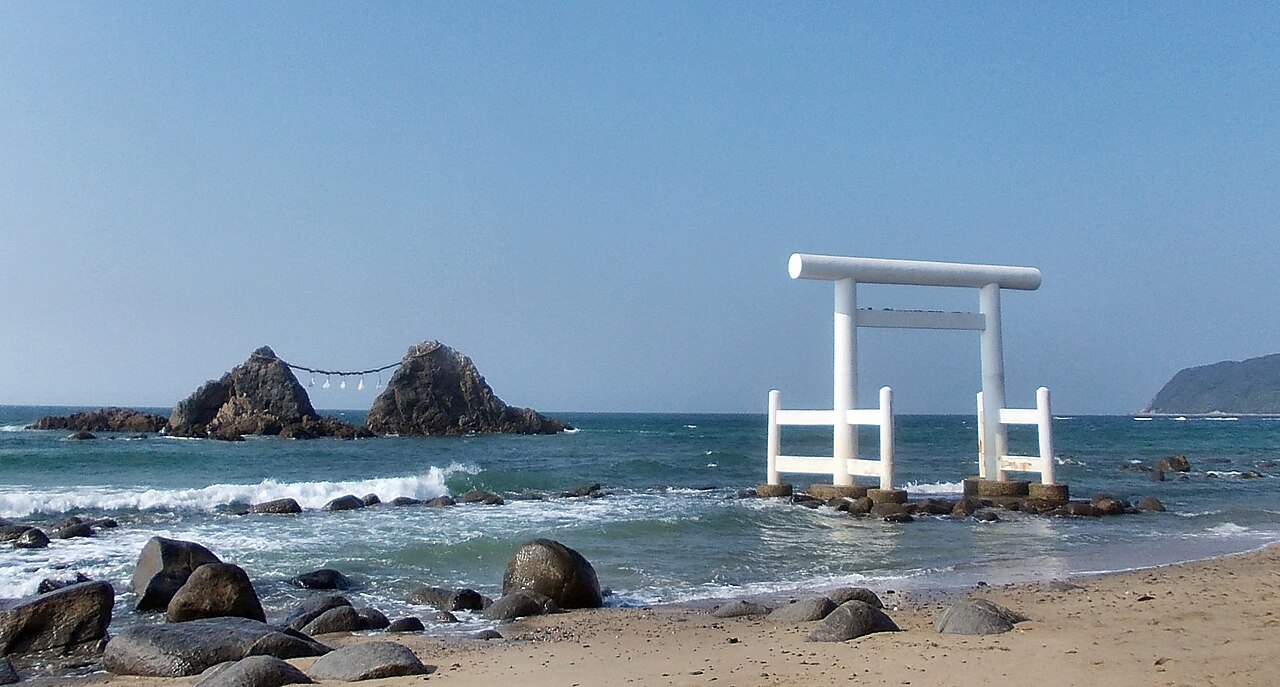
Sakurai Futamigaura is a stretch of coast on the Genkai Sea in Itoshima, Fukuoka Prefecture, known for the Meoto Iwa 'couple rocks' joined by a sacred straw rope, with a white torii gate standing in the sea before them. Sakurai Shrine venerates the two rocks as sacred bodies (goshintai) of the deities Izanagi and Izanami and treats the coast as its Uranomiya. Public tourism guides introduce the spot for its sea views and sunsets over the water.
- The Meoto Iwa 'couple rocks', venerated by Sakurai Shrine as sacred bodies of Izanagi and Izanami
- A white torii gate standing in the sea, erected in 1968 according to the shrine
- Sunset views over the Genkai Sea, introduced in public tourism guides
- The sacred straw rope between the rocks, a practice revived in 1957; the shrine notes its origin is unknown
plan your visit
Visit facts for Sakurai Futamigaura
- Access
- From JR Kyudai-Gakkentoshi Station, take a Showa Bus to the Futamigaura (Meotoiwa-mae) stop, then walk about 4 minutes. Buses are infrequent, so check the return timetable first.
- Nearest station
- Futamigaura (Meotoiwa-mae) bus stop (Showa Bus, from JR Kyudai-Gakkentoshi Station)
- Hours
- This is an open stretch of coast with no gates. Check the tide, wind, waves, and sunset time for the day, and keep away from the water in rough weather.
- Fees
- Viewing the coast is free. The municipal parking lot charges 300 yen per hour, per public tourism information.
- Parking
- The municipal car park provides paid parking with about 47 spaces. Do not park on the road when it is full. If visiting around sunset, plan your return journey in advance.
- Typical visit
- About 35 minutes (Unmeguri's estimate, not an official figure)
- Facts checked
- 2026-10-22
background
Central feature
The right sacred rock (Izanagi-no-Mikoto) · The left sacred rock (Izanami-no-Mikoto)
Sakurai Shrine explains the right rock as the sacred body of Izanagi-no-Mikoto and the left as that of Izanami-no-Mikoto, and treats this coast as its Uranomiya. The white torii in the sea was erected in 1968, and the hanging of the sacred straw rope was revived in 1957, though the shrine states that its origin and the period of interruption are unknown.
etiquette
Visiting with respect
- View the rocks and the torii from the safe public areas onshore; do not enter the water, climb the rocks, or touch the torii.
- Treat the sacred straw rope and its history as the shrine presents them, without adding invented stories.
- Do not park on the roadside; use the municipal lot and plan your return bus before sunset viewing.
- Hours, fees and reception can change; check the official information before you go.
faq
Common questions
How do I get to Sakurai Futamigaura?
From JR Kyudai-Gakkentoshi Station, take a Showa Bus to the Futamigaura (Meotoiwa-mae) stop, then walk about 4 minutes. Buses are infrequent, so check the return timetable first. Nearest station: Futamigaura (Meotoiwa-mae) bus stop (Showa Bus, from JR Kyudai-Gakkentoshi Station).
How much does it cost to visit Sakurai Futamigaura?
Viewing the coast is free. The municipal parking lot charges 300 yen per hour, per public tourism information.
What are the opening hours of Sakurai Futamigaura?
This is an open stretch of coast with no gates. Check the tide, wind, waves, and sunset time for the day, and keep away from the water in rough weather.
Is there parking at Sakurai Futamigaura?
The municipal car park provides paid parking with about 47 spaces. Do not park on the road when it is full. If visiting around sunset, plan your return journey in advance.
How long should I spend at Sakurai Futamigaura?
Unmeguri's estimate for a visit is about 35 minutes. This is an editorial estimate, not an official figure.
Can I walk out to the couple rocks?
No. The rocks are venerated as sacred bodies of the deities and stand in the sea; visitors view them from the shore without entering the water or climbing on them.
sources
Sources and checked dates
- 桜井二見ヶ浦・御神体岩|櫻井神社(opens in a new tab)
- 桜井二見ヶ浦の交通・駐車|糸島市観光協会(opens in a new tab)
- 桜井二見ヶ浦|福岡県観光Web(opens in a new tab)
Facts last checked on 2026-10-22. Sources are in Japanese. Unmeguri separates officially documented facts from its own editorial reading, and does not promise that any wish or outcome will be realized.