Miyajidake Shrine
Miyajidake Jinja · Miyajidake-jinja · 宮地嶽神社
overview
What this place is
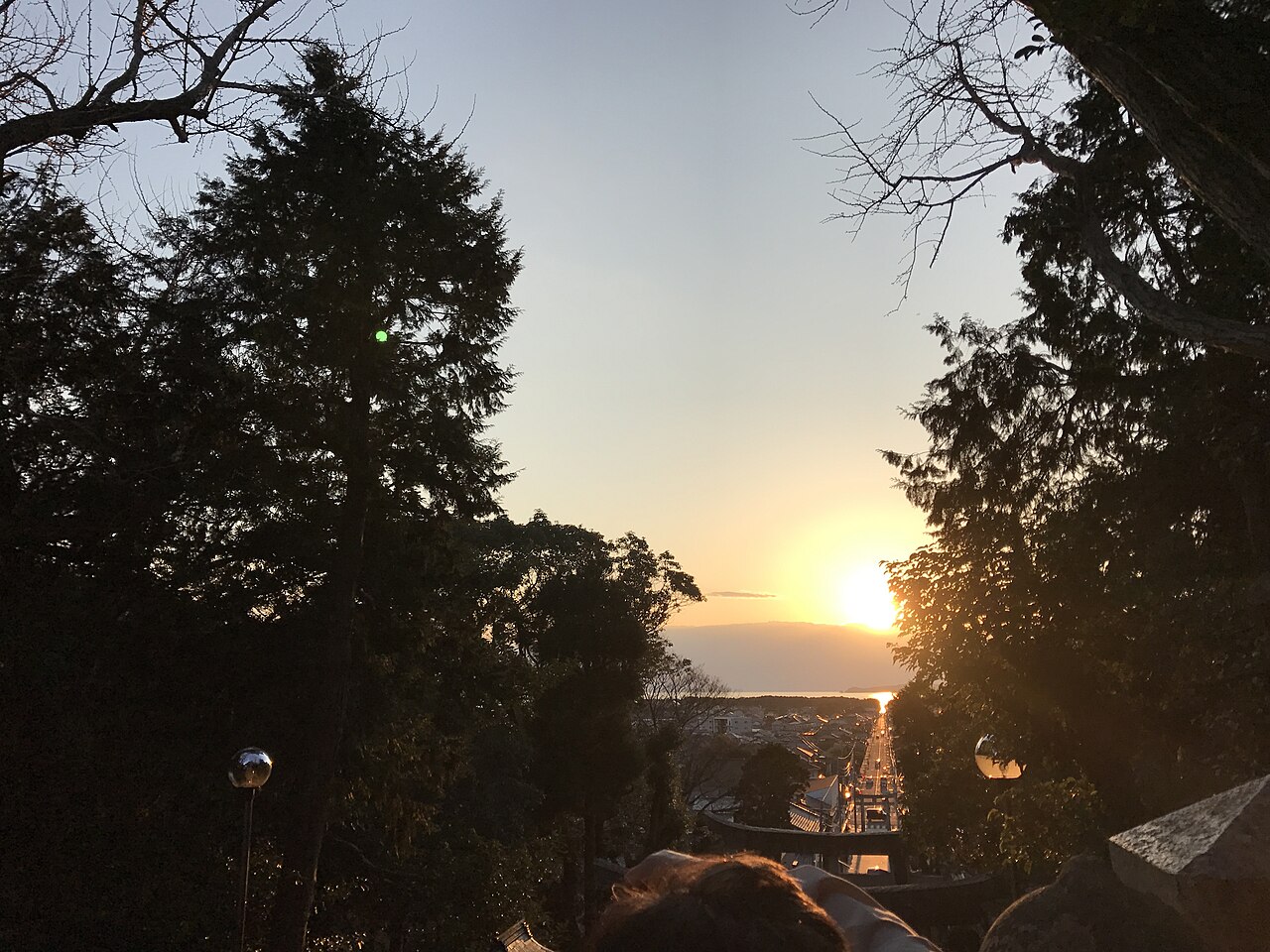
Miyajidake Shrine is a Shinto shrine in Fukutsu, Fukuoka Prefecture, whose principal deity is Empress Jingu, worshipped together with Katsumura-no-Okami and Katsuyori-no-Okami. The shrine introduces three great votive offerings that characterize it: a giant sacred straw rope, a giant drum, and a giant bell. Its long approach runs straight toward the sea, and in certain seasons the setting sun aligns with this axis in a view known as the Path of Light (Hikari no Michi).
- Three great votive offerings introduced by the shrine: a giant sacred straw rope, a giant drum, and a giant bell
- A shrine approach aligned toward the sea, the stage of the seasonal Path of Light (Hikari no Michi)
- The Okunomiya Hassha, eight sub-shrines in the wooded area beyond the main hall, an optional extension to a visit
- A faith tradition of kaiun (opening fortune) and prosperity in business, as explained by the shrine
plan your visit
Visit facts for Miyajidake Shrine
- Access
- From JR Fukuma Station, about 5 minutes by bus or taxi, or about 25 minutes on foot. During the Path of Light season, expect traffic control and crowd guidance.
- Nearest station
- Miyajidake-jinja-mae bus stop (Nishitetsu Bus, from JR Fukuma Station)
- Hours
- The main hall is generally open from sunrise to sunset. Per the official guidance, prayer services run 9:00 to 17:00 and the amulet office 9:00 to 18:00; times can change for festivals and the Path of Light season, so check before you visit.
- Fees
- The shrine grounds are free to enter. Prayer services are from 5,000 yen per the official guidance.
- Parking
- Available in Japanese only: 祭事や光の道の時期は駐車・観覧方法が変わるため、最新の公式案内に従います。
- Typical visit
- About 60 minutes (Unmeguri's estimate, not an official figure)
- Facts checked
- 2026-10-22
background
Enshrined deities
Empress Jingu · Katsumura-no-Okami · Katsuyori-no-Okami
The shrine's official history names Empress Jingu as the principal deity, enshrined together with Katsumura-no-Okami and Katsuyori-no-Okami, and traces its founding to her prayers at Miyajidake. The shrine explains its faith in terms of opening fortune and prosperity in business.
etiquette
Visiting with respect
- Bow lightly once before passing through the torii gate, and rinse your hands at the temizuya water basin before worship.
- The Okunomiya Hassha eight sub-shrines are an optional extension; a visit is complete with worship at the main hall.
- The Path of Light depends on season, weather, and crowds; on days with reserved viewing areas or traffic control, follow the on-site arrangements.
- Hours, fees and reception can change; check the official information before you go.
faq
Common questions
How do I get to Miyajidake Shrine?
From JR Fukuma Station, about 5 minutes by bus or taxi, or about 25 minutes on foot. During the Path of Light season, expect traffic control and crowd guidance. Nearest station: Miyajidake-jinja-mae bus stop (Nishitetsu Bus, from JR Fukuma Station).
How much does it cost to visit Miyajidake Shrine?
The shrine grounds are free to enter. Prayer services are from 5,000 yen per the official guidance.
What are the opening hours of Miyajidake Shrine?
The main hall is generally open from sunrise to sunset. Per the official guidance, prayer services run 9:00 to 17:00 and the amulet office 9:00 to 18:00; times can change for festivals and the Path of Light season, so check before you visit.
Is there parking at Miyajidake Shrine?
Parking information for Miyajidake Shrine is available in Japanese only: 祭事や光の道の時期は駐車・観覧方法が変わるため、最新の公式案内に従います。
How long should I spend at Miyajidake Shrine?
Unmeguri's estimate for a visit is about 60 minutes. This is an editorial estimate, not an official figure.
Can I always see the Path of Light?
No. The alignment of the setting sun with the shrine approach happens only in certain seasons and depends on weather and crowds; viewing arrangements may apply on those days. The shrine itself can be visited year-round.
sources
Sources and checked dates
- 御由緒・御祭神|宮地嶽神社(opens in a new tab)
- 御祈祷案内|宮地嶽神社(opens in a new tab)
- 交通案内|宮地嶽神社(opens in a new tab)
- 御守り案内|宮地嶽神社(opens in a new tab)
- 奥之宮八社|宮地嶽神社(opens in a new tab)
Facts last checked on 2026-10-22. Sources are in Japanese. Unmeguri separates officially documented facts from its own editorial reading, and does not promise that any wish or outcome will be realized.