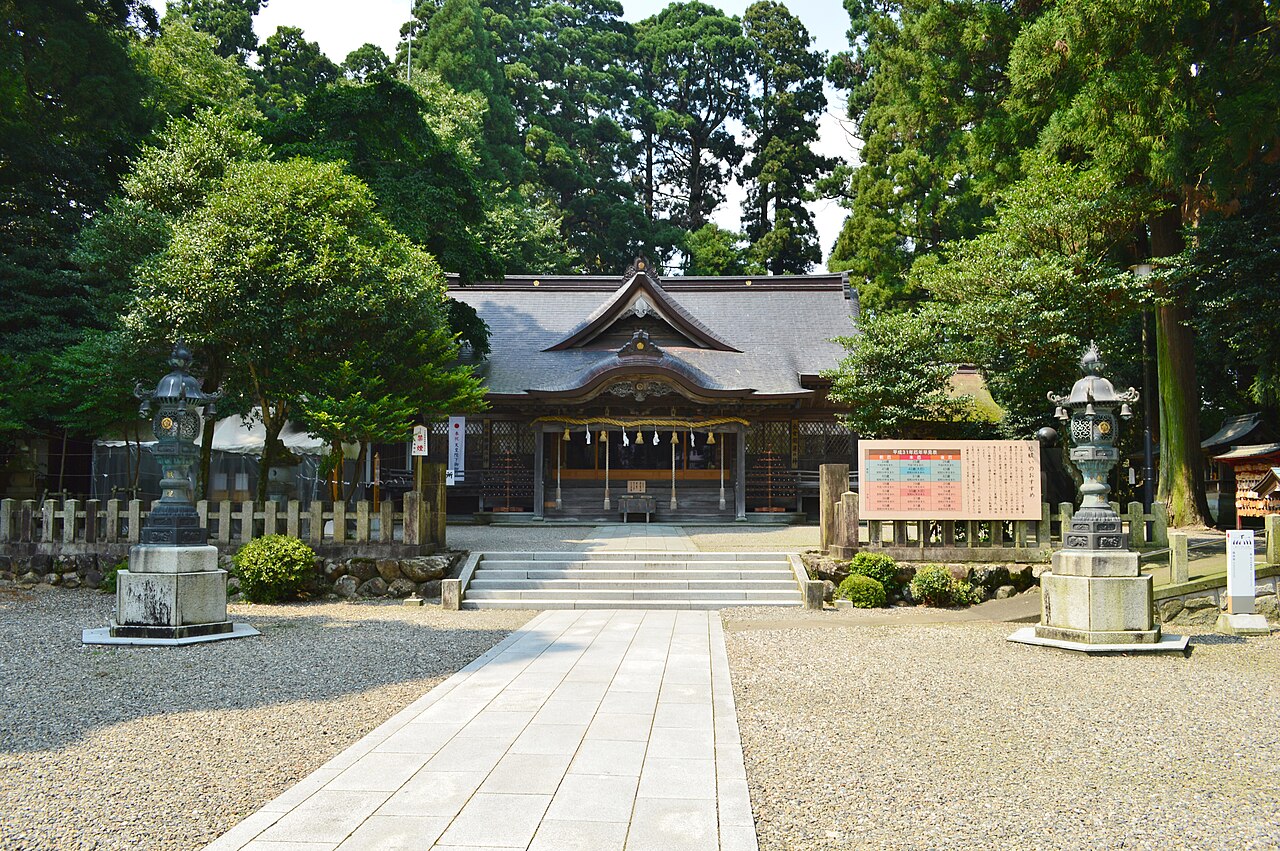
Tsurugi Shrine
Tsurugi Jinja · Echizen Ninomiya Tsurugi · 劔神社
overview
What this place is
Tsurugi Shrine at Ota in Echizen is the second shrine of Echizen province, enshrining Susanoo-no-Okami together with Kehi-no-Okami and Oshikuma-no-Miko. The priestly family that served it took the name Ota from the district, and the shrine’s own account relates that Oda Nobunaga revered it as the shrine of his clan.
- The second shrine of Echizen province, in the village of Ota
- Susanoo-no-Okami as the chief deity, with two others enshrined alongside
- A priestly family that took the name Ota from the district
- A shrine revered by Oda Nobunaga as his clan’s own, by the shrine’s account
plan your visit
Visit facts for Tsurugi Shrine
- Access
- About 45 minutes from Takefu Station on the Hapi-Line Fukui by local bus to the Myojin-mae stop, then about 3 minutes on foot. Check how often the bus runs and the return service.
- Nearest station
- Myojin-mae bus stop (Fukutetsu Bus)
- Hours
- The grounds can be visited throughout the year. Check the shrine’s own information for prayers, the amulet desk, festival days and any showing of its treasures.
- Fees
- Visiting the grounds is free. Prayers, amulets and any special showings are separate.
- Parking
- Available in Japanese only: 公式・地域の指定駐車場を利用します。
- Goshuin (seal stamps)
- Goshuin are given at the amulet desk. The hours are not published here, so confirm them on the day.
- Typical visit
- About 45 minutes (Unmeguri's estimate, not an official figure)
- Facts checked
- 2026-10-22
background
Enshrined deities
Susanoo-no-Okami · Kehi-no-Okami · Oshikuma-no-Miko
Tsurugi Shrine is the second shrine of Echizen province, with Susanoo-no-Okami as its chief deity and Kehi-no-Okami and Oshikuma-no-Miko enshrined alongside him.
etiquette
Visiting with respect
- Visiting the grounds within the village is a complete visit; walking the places connected with the Oda family nearby is a separate plan.
- The connection with Oda Nobunaga is the shrine’s own account, not settled history.
- Do not touch or climb on the halls, and follow the notices on photography.
- The number of amulets or the size of an offering is not a measure of anything.
- Check the bus times and the return service before you set out.
- Hours, fees and reception can change; check the official information before you go.
faq
Common questions
How do I get to Tsurugi Shrine?
About 45 minutes from Takefu Station on the Hapi-Line Fukui by local bus to the Myojin-mae stop, then about 3 minutes on foot. Check how often the bus runs and the return service. Nearest station: Myojin-mae bus stop (Fukutetsu Bus).
How much does it cost to visit Tsurugi Shrine?
Visiting the grounds is free. Prayers, amulets and any special showings are separate.
What are the opening hours of Tsurugi Shrine?
The grounds can be visited throughout the year. Check the shrine’s own information for prayers, the amulet desk, festival days and any showing of its treasures.
Is there parking at Tsurugi Shrine?
Parking information for Tsurugi Shrine is available in Japanese only: 公式・地域の指定駐車場を利用します。
How long should I spend at Tsurugi Shrine?
Unmeguri's estimate for a visit is about 45 minutes. This is an editorial estimate, not an official figure.
Can I get a goshuin at Tsurugi Shrine?
Goshuin are given at the amulet desk. The hours are not published here, so confirm them on the day.
What is Tsurugi Shrine known for?
It is the second shrine of Echizen province, enshrining Susanoo-no-Okami, and its own account connects it with the Oda family.
What is the connection with Oda Nobunaga?
The priestly family serving the shrine took the name Ota from the district, and the shrine relates that Nobunaga revered it as his clan’s shrine.
sources
Sources and checked dates
Facts last checked on 2026-10-22. Sources are in Japanese. Unmeguri separates officially documented facts from its own editorial reading, and does not promise that any wish or outcome will be realized.