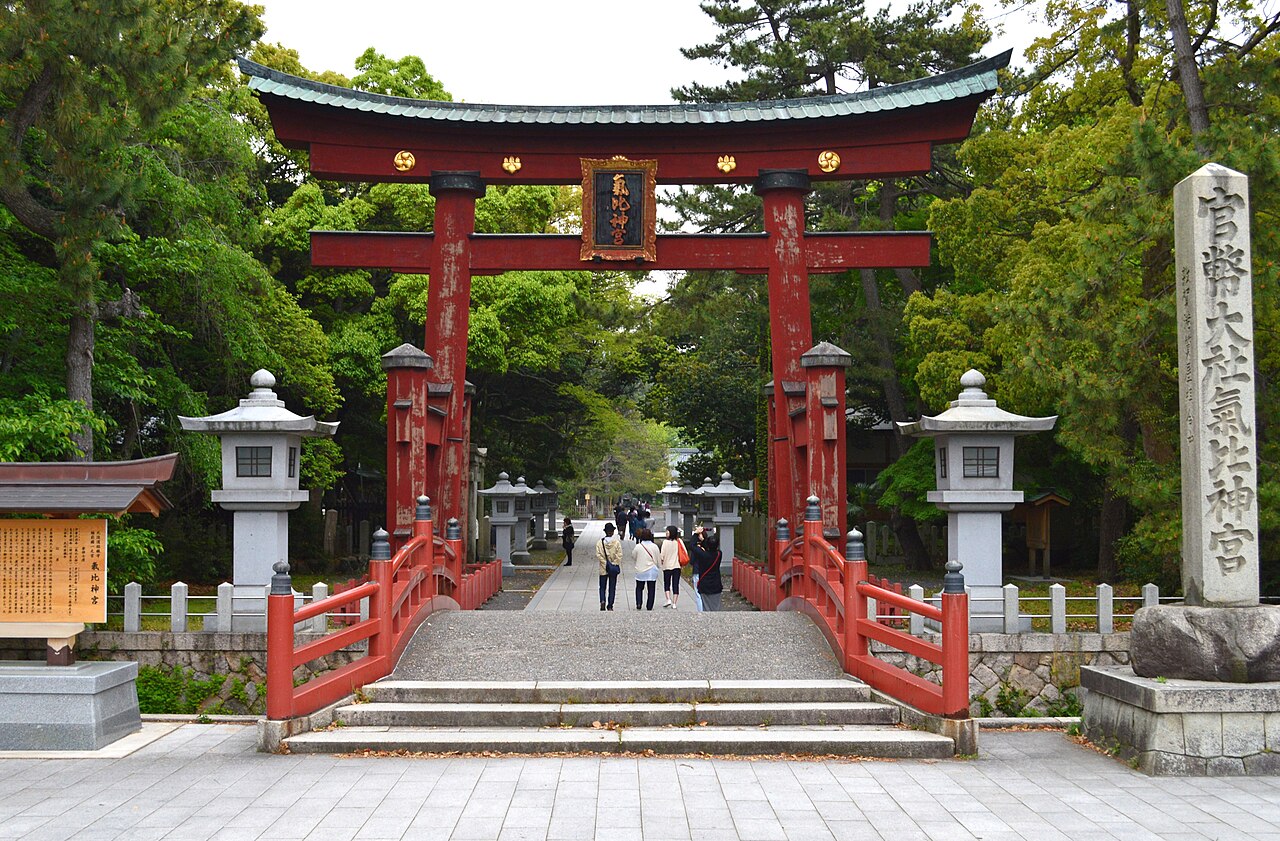
Kehi Jingu Shrine
Kehi Shrine · Kehi Jingu · 氣比神宮
overview
What this place is
Kehi Jingu in Tsuruga is the first shrine of Echizen province and the guardian of the Hokuriku road, enshrining seven deities with Izasawake-no-Mikoto as the chief among them. It carries a faith concerned with the whole of daily life: clothing, food and shelter, sea travel, farming and fishing. Its old main hall and other buildings were lost in the war, and the halls standing now were rebuilt afterwards.
- The first shrine of Echizen province and guardian of the Hokuriku road
- Seven deities, with Izasawake-no-Mikoto as the chief among them
- Halls rebuilt after the war, on level ground in the middle of the town
- A great torii gate at the entrance to the grounds
plan your visit
Visit facts for Kehi Jingu Shrine
- Access
- About 5 minutes from JR Tsuruga Station on the Tsuruga loop bus to the Kehi Jingu stop, then about a minute on foot. The shrine can also be reached on foot from the station.
- Nearest station
- Kehi Jingu stop (Tsuruga loop bus)
- Hours
- Check the shrine’s own information for visiting, prayers, the amulet desk, festival days and any works around the great torii.
- Fees
- Visiting the grounds is free. Prayers and amulets are separate.
- Parking
- Available in Japanese only: 公式駐車場または公共交通を利用し、祭礼・工事の規制に従います。
- Goshuin (seal stamps)
- Goshuin are given at the amulet desk. The hours are not published here, so confirm them on the day.
- Typical visit
- About 45 minutes (Unmeguri's estimate, not an official figure)
- Facts checked
- 2026-10-22
background
Enshrined deities
Izasawake-no-Mikoto · Emperor Chuai · Empress Jingu · Emperor Ojin · Yamato Takeru-no-Mikoto · Tamahime-no-Mikoto · Takenouchi-no-Sukune-no-Mikoto
Kehi Jingu enshrines seven deities with Izasawake-no-Mikoto as the chief among them, and carries a faith concerned with the whole of daily life: clothing, food and shelter, sea travel, and farming and fishing.
etiquette
Visiting with respect
- The grounds are level and in the middle of the town; from the great torii to the main hall is a complete visit.
- Check any works around the great torii before you go, as they can change the way in.
- Do not touch or climb on the halls or the torii, and follow the notices on photography.
- The number of amulets or the size of an offering is not a measure of anything.
- The halls standing now were rebuilt after the war; the older buildings were lost.
- Hours, fees and reception can change; check the official information before you go.
faq
Common questions
How do I get to Kehi Jingu Shrine?
About 5 minutes from JR Tsuruga Station on the Tsuruga loop bus to the Kehi Jingu stop, then about a minute on foot. The shrine can also be reached on foot from the station. Nearest station: Kehi Jingu stop (Tsuruga loop bus).
How much does it cost to visit Kehi Jingu Shrine?
Visiting the grounds is free. Prayers and amulets are separate.
What are the opening hours of Kehi Jingu Shrine?
Check the shrine’s own information for visiting, prayers, the amulet desk, festival days and any works around the great torii.
Is there parking at Kehi Jingu Shrine?
Parking information for Kehi Jingu Shrine is available in Japanese only: 公式駐車場または公共交通を利用し、祭礼・工事の規制に従います。
How long should I spend at Kehi Jingu Shrine?
Unmeguri's estimate for a visit is about 45 minutes. This is an editorial estimate, not an official figure.
Can I get a goshuin at Kehi Jingu Shrine?
Goshuin are given at the amulet desk. The hours are not published here, so confirm them on the day.
What is Kehi Jingu known for?
It is the first shrine of Echizen province and guardian of the Hokuriku road, enshrining seven deities with Izasawake-no-Mikoto at their head.
Are the buildings old?
The old main hall and other buildings were lost in the war. The halls standing now were rebuilt and laid out afterwards.
sources
Sources and checked dates
Facts last checked on 2026-10-22. Sources are in Japanese. Unmeguri separates officially documented facts from its own editorial reading, and does not promise that any wish or outcome will be realized.