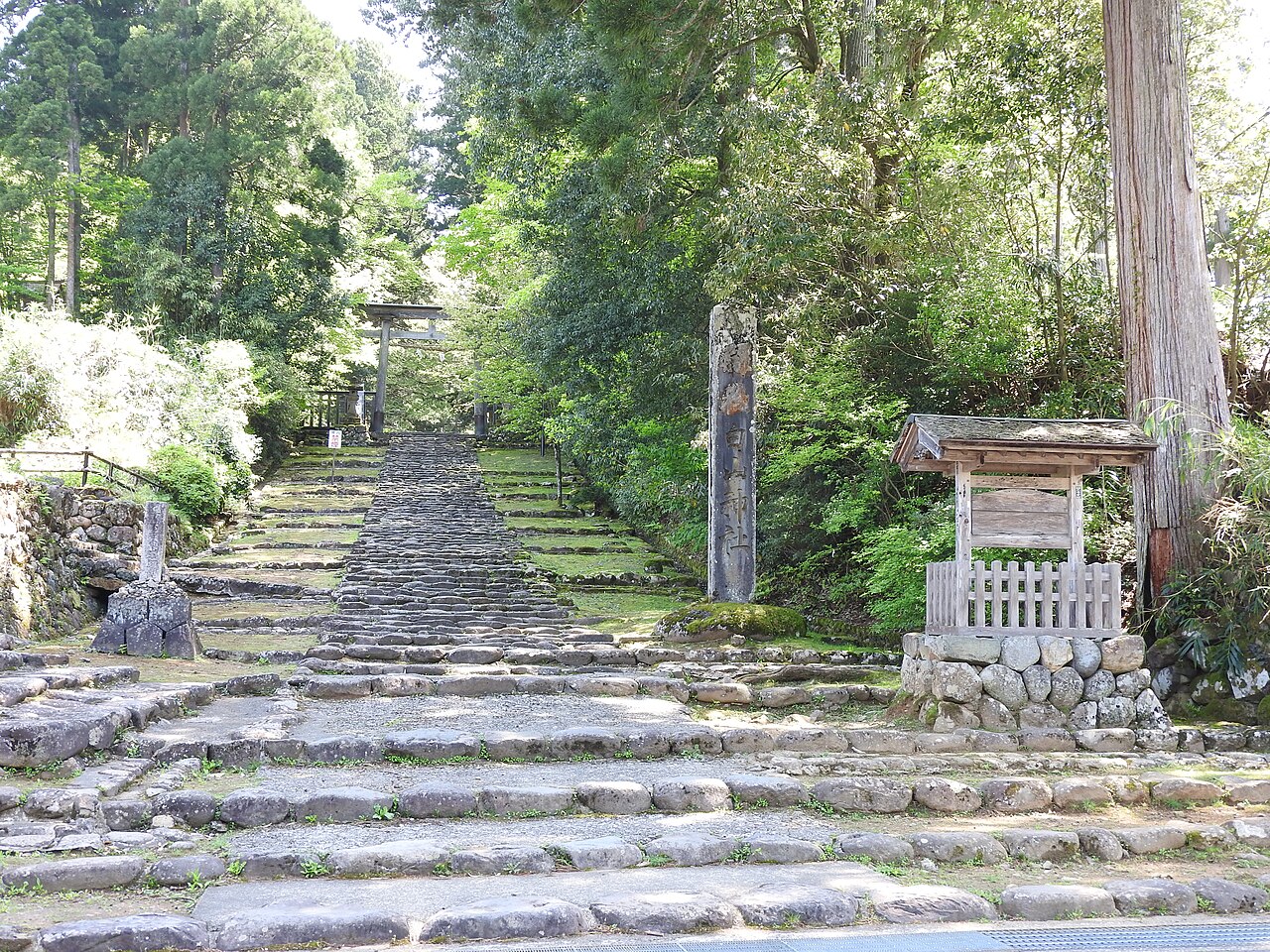
Heisenji Hakusan Shrine
Hakusan Heisenji · Heisenji Hakusan Jinja · 平泉寺白山神社
overview
What this place is
Heisenji in Katsuyama grew as the Echizen base of the Hakusan faith, behind a tradition that Taicho opened the mountain, and became a great centre for the climb. Its halls were destroyed in 1574, and after Shinto and Buddhism were separated in the Meiji era it became Hakusan Shrine, enshrining the three Hakusan deities. Most of the old temple town remains underground, still being excavated and preserved.
- A moss-covered approach of stone paving through cedar woods
- The Echizen base of the Hakusan faith, once a great centre for the climb
- A temple town of which most remains underground, still being excavated
- The old Gensei-in garden, within the grounds
plan your visit
Visit facts for Heisenji Hakusan Shrine
- Access
- About 20 minutes from Katsuyama Station on the Echizen Railway by community bus or taxi to the Heisenji Jinja-mae stop, then about 5 minutes on foot. Check which days the bus runs.
- Nearest station
- Heisenji Jinja-mae stop (Katsuyama community bus)
- Hours
- The grounds can be visited throughout the year. Check the snow, the excavation areas, the old Gensei-in garden, festival days and the opening of the information centre.
- Fees
- Visiting the grounds is free. The old Gensei-in garden and the information facilities are charged separately; check before you go.
- Parking
- Available in Japanese only: 指定駐車場を利用し、集落の住宅前や史跡区域へ車を入れません。
- Typical visit
- About 75 minutes (Unmeguri's estimate, not an official figure)
- Facts checked
- 2026-10-22
background
Enshrined deity
the three Hakusan deities
Heisenji grew as the Echizen base of the Hakusan faith, and after Shinto and Buddhism were separated it became Heisenji Hakusan Shrine, enshrining the deities of Mount Hakusan.
etiquette
Visiting with respect
- The stone paving is mossy and uneven and the historic site is wide; reaching the worship hall from the first torii is a complete visit.
- You do not need to walk the whole excavated site; much of the old town is still underground.
- Do not step on the moss or leave the paths through the excavation areas.
- Do not touch or climb on the halls, and follow the notices on photography.
- Check the snow before you go, as it changes both the road and the ground underfoot.
- Hours, fees and reception can change; check the official information before you go.
faq
Common questions
How do I get to Heisenji Hakusan Shrine?
About 20 minutes from Katsuyama Station on the Echizen Railway by community bus or taxi to the Heisenji Jinja-mae stop, then about 5 minutes on foot. Check which days the bus runs. Nearest station: Heisenji Jinja-mae stop (Katsuyama community bus).
How much does it cost to visit Heisenji Hakusan Shrine?
Visiting the grounds is free. The old Gensei-in garden and the information facilities are charged separately; check before you go.
What are the opening hours of Heisenji Hakusan Shrine?
The grounds can be visited throughout the year. Check the snow, the excavation areas, the old Gensei-in garden, festival days and the opening of the information centre.
Is there parking at Heisenji Hakusan Shrine?
Parking information for Heisenji Hakusan Shrine is available in Japanese only: 指定駐車場を利用し、集落の住宅前や史跡区域へ車を入れません。
How long should I spend at Heisenji Hakusan Shrine?
Unmeguri's estimate for a visit is about 75 minutes. This is an editorial estimate, not an official figure.
What is Heisenji Hakusan Shrine?
The Echizen base of the Hakusan faith, once a great temple town. After Shinto and Buddhism were separated it became a shrine enshrining the Hakusan deities.
What happened to the old temple?
The halls were destroyed in 1574. Most of the temple town remains underground and is still being excavated and preserved.
sources
Sources and checked dates
Facts last checked on 2026-10-22. Sources are in Japanese. Unmeguri separates officially documented facts from its own editorial reading, and does not promise that any wish or outcome will be realized.