Iwayaji Temple
Kaiganzan Iwayaji · Iwaya-ji · 岩屋寺
overview
What this place is
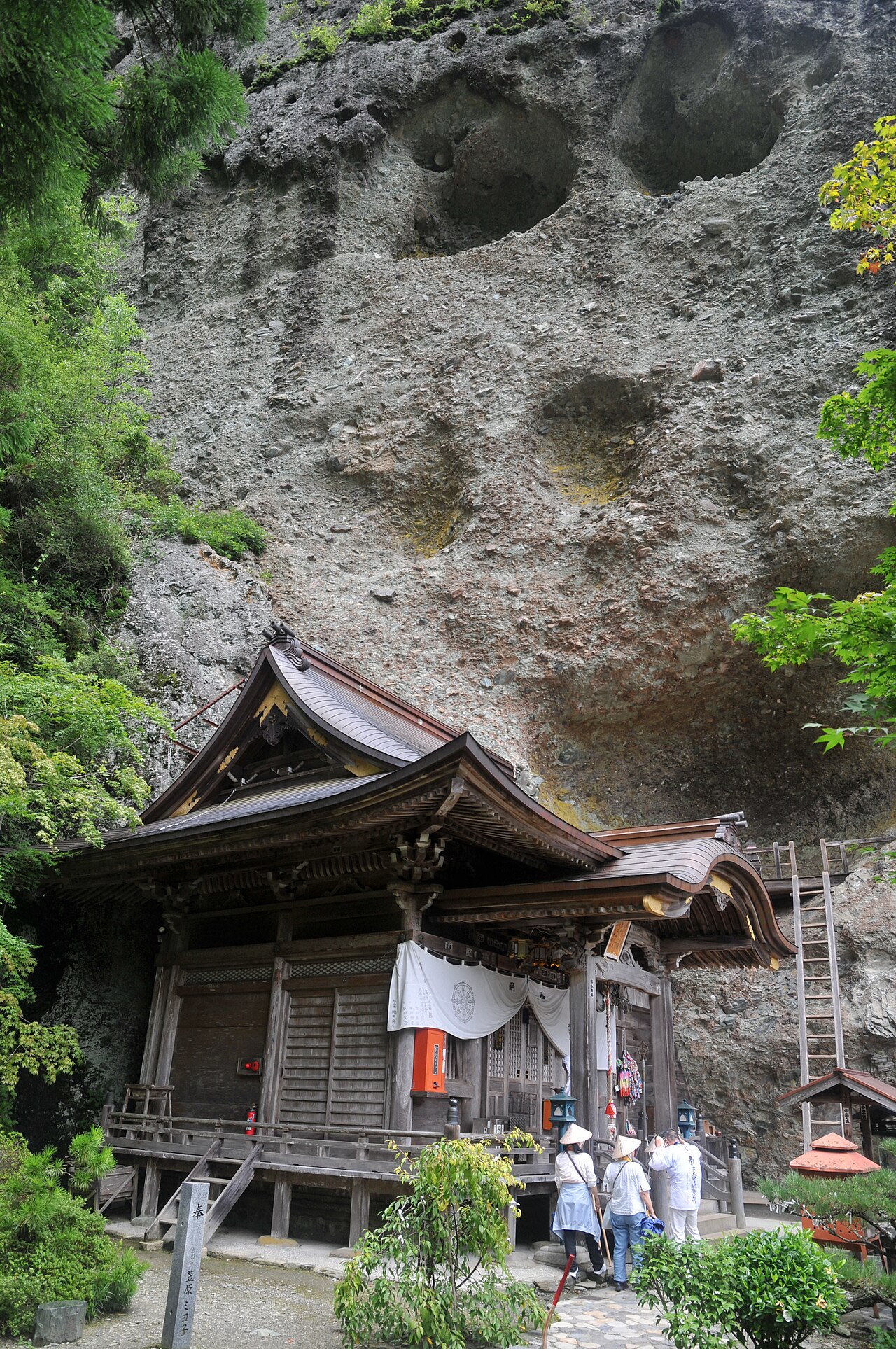
Iwayaji in Kumakogen is the forty-fifth temple of the Shikoku pilgrimage, whose principal image is a hidden image of Fudo Myoo. Following an account in which the mountain itself is the object of worship, the main hall is built into the great rock. Fire in 1898 took many of the halls and records; the present main hall was completed in 1927 and the Daishido in 1920, the latter designated an Important Cultural Property in 2007.
- A hidden image of Fudo Myoo as the principal image
- A main hall built into the rock face
- The Daishido of 1920, an Important Cultural Property since 2007
- Rock forms left by the uplift and erosion of a conglomerate bed
plan your visit
Visit facts for Iwayaji Temple
- Access
- About 600 metres uphill on a mountain path from the Iwayaji bus stop or the car park. Buses are few, so settle your way back first.
- Nearest station
- Iwayaji bus stop (Iyotetsu Nanyo bus)
- Hours
- Check the temple’s site on the day for worship, the sutra desk, goma rites and reception for the inner practice. Ordinary worship and the Sekiwari practice, which needs reception, an offering and proper kit, are different things.
- Fees
- There is no single fee for ordinary worship. The prefectural tourism site gives parking at 300 yen a vehicle and the Sekiwari practice as received at the sutra desk with an offering of 300 yen. Confirm the current terms on the day.
- Parking
- Available in Japanese only: いよ観ネットは普通車105台、1台300円と案内しています。現地の料金・区画を確認します。
- Typical visit
- About 90 minutes (Unmeguri's estimate, not an official figure)
- Facts checked
- 2026-10-22
background
Principal image
Fudo Myoo (a hidden image)
The temple gives its principal image as a hidden image of Fudo Myoo and explains that, following an account in which the mountain itself is the object of worship, the main hall is built as one with the great rock.
etiquette
Visiting with respect
- The climb from the car park to the main hall is steep and continuous; allow for it rather than for a short walk.
- The Sekiwari practice has narrow rock gaps, drops, chains and ladders; it is not part of completing an ordinary visit.
- Do not clap at a temple, and follow the notices on quiet and photography.
- Do not touch the rock face or the halls built against it.
- Buses are few; confirm the last one before you go up.
- Hours, fees and reception can change; check the official information before you go.
faq
Common questions
How do I get to Iwayaji Temple?
About 600 metres uphill on a mountain path from the Iwayaji bus stop or the car park. Buses are few, so settle your way back first. Nearest station: Iwayaji bus stop (Iyotetsu Nanyo bus).
How much does it cost to visit Iwayaji Temple?
There is no single fee for ordinary worship. The prefectural tourism site gives parking at 300 yen a vehicle and the Sekiwari practice as received at the sutra desk with an offering of 300 yen. Confirm the current terms on the day.
What are the opening hours of Iwayaji Temple?
Check the temple’s site on the day for worship, the sutra desk, goma rites and reception for the inner practice. Ordinary worship and the Sekiwari practice, which needs reception, an offering and proper kit, are different things.
Is there parking at Iwayaji Temple?
Parking information for Iwayaji Temple is available in Japanese only: いよ観ネットは普通車105台、1台300円と案内しています。現地の料金・区画を確認します。
How long should I spend at Iwayaji Temple?
Unmeguri's estimate for a visit is about 90 minutes. This is an editorial estimate, not an official figure.
What is the principal image?
A hidden image of Fudo Myoo. The temple is the forty-fifth of the Shikoku pilgrimage.
How hard is the approach?
About 600 metres uphill on a mountain path from the bus stop or car park, steep for much of it.
What happened to the older halls?
Fire in 1898 took many of them. The present main hall dates from 1927 and the Daishido from 1920.
sources
Sources and checked dates
- 岩屋寺の縁起・御本尊|海岸山 岩屋寺(opens in a new tab)
- 本堂・大師堂・岩峰の案内|海岸山 岩屋寺(opens in a new tab)
- 祈祷・護摩の案内|海岸山 岩屋寺(opens in a new tab)
- 岩屋寺への交通案内|海岸山 岩屋寺(opens in a new tab)
- 岩屋寺の参道・奥之院情報|いよ観ネット(opens in a new tab)
Facts last checked on 2026-10-22. Sources are in Japanese. Unmeguri separates officially documented facts from its own editorial reading, and does not promise that any wish or outcome will be realized.