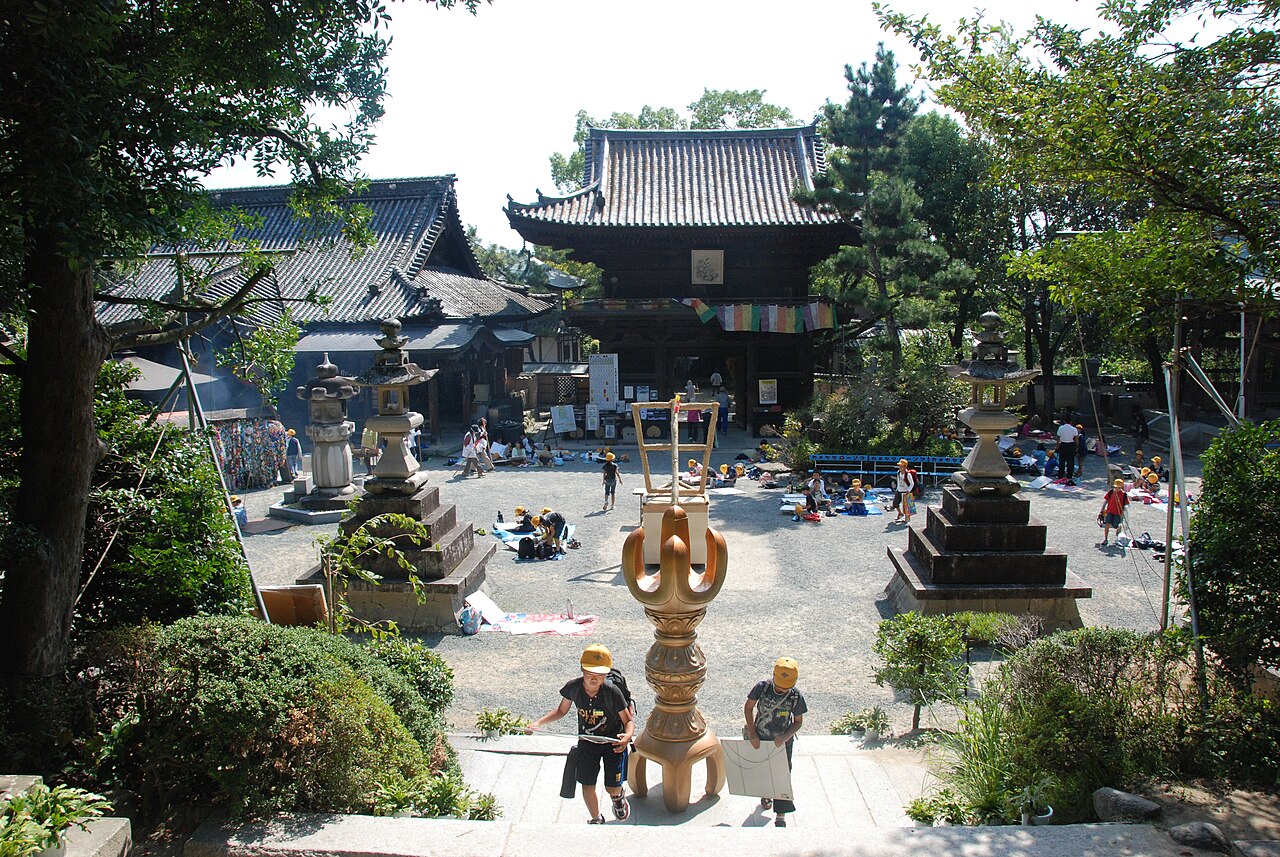
Ishiteji Temple
Kumanozan Ishiteji · Ishite-ji · 石手寺
overview
What this place is
Ishiteji in Matsuyama is the fifty-first temple of the Shikoku pilgrimage, with Yakushi Nyorai as its principal image. The temple relates a founding in 728, when it was called Anyoji and Gyoki opened the eyes of the image, and it keeps the story of Emon Saburo, said to have been reborn into the Kono house holding a stone in his hand. The Nio gate is a National Treasure.
- Yakushi Nyorai as the principal image
- A Nio gate that is a National Treasure, with a three-storey pagoda among other properties
- The story of Emon Saburo and the stone
- A dark mantra cave, entered as a separate choice
plan your visit
Visit facts for Ishiteji Temple
- Access
- About a minute on foot from the Ishiteji bus stop; it can also be reached on foot from the Dogo Onsen area. Check the hours of the grounds and the cave.
- Nearest station
- Ishiteji bus stop (Iyotetsu bus)
- Hours
- The temple office runs from 8:00 to 17:00 and the mantra cave from 8:30 to 16:30. Goma rites have set days and hours and are sometimes suspended; check the current schedule if you want one.
- Fees
- Ordinary worship is free. The mantra cave is 100 yen, and the treasure hall is 200 yen for adults and 100 yen for children. Goma rites and prayers are separate.
- Parking
- Available in Japanese only: 公式アクセスは無料駐車場を案内しています。混雑時は現地誘導に従います。
- Typical visit
- About 60 minutes (Unmeguri's estimate, not an official figure)
- Facts checked
- 2026-10-22
background
Principal image
Yakushi Nyorai
The temple gives Yakushi Nyorai as its principal image and relates a founding in 728, a later change of name and the story of the stone of Emon Saburo; the temple’s own tradition and what can be checked in its buildings and properties are kept apart, and nothing is claimed about illness or fate.
etiquette
Visiting with respect
- Keep worship in the grounds and the dark cave apart; if the dark, the narrowness or the footing worries you, the gate, main hall and Daishido complete the visit.
- Do not clap at a temple, and follow the notices on quiet and photography.
- The Nio gate is a National Treasure; do not touch it or lean on it.
- Read the story of Emon Saburo as the temple’s own tradition rather than as record.
- Check the goma schedule rather than assuming a rite will be held.
- Hours, fees and reception can change; check the official information before you go.
faq
Common questions
How do I get to Ishiteji Temple?
About a minute on foot from the Ishiteji bus stop; it can also be reached on foot from the Dogo Onsen area. Check the hours of the grounds and the cave. Nearest station: Ishiteji bus stop (Iyotetsu bus).
How much does it cost to visit Ishiteji Temple?
Ordinary worship is free. The mantra cave is 100 yen, and the treasure hall is 200 yen for adults and 100 yen for children. Goma rites and prayers are separate.
What are the opening hours of Ishiteji Temple?
The temple office runs from 8:00 to 17:00 and the mantra cave from 8:30 to 16:30. Goma rites have set days and hours and are sometimes suspended; check the current schedule if you want one.
Is there parking at Ishiteji Temple?
Parking information for Ishiteji Temple is available in Japanese only: 公式アクセスは無料駐車場を案内しています。混雑時は現地誘導に従います。
How long should I spend at Ishiteji Temple?
Unmeguri's estimate for a visit is about 60 minutes. This is an editorial estimate, not an official figure.
What is the principal image?
Yakushi Nyorai. The temple relates a founding in 728 under the name Anyoji.
What is the story of the stone?
The temple relates that Emon Saburo, having walked the pilgrimage, was reborn into the Kono house holding a stone in his hand.
sources
Sources and checked dates
- 石手寺の由緒・御本尊・衛門三郎伝説|熊野山 石手寺(opens in a new tab)
- 石手寺の開門・洞窟・交通案内|熊野山 石手寺(opens in a new tab)
- 護摩・祈祷の案内|熊野山 石手寺(opens in a new tab)
- 御札・授与の案内|熊野山 石手寺(opens in a new tab)
- 石手寺の観光・文化財情報|いよ観ネット(opens in a new tab)
Facts last checked on 2026-10-22. Sources are in Japanese. Unmeguri separates officially documented facts from its own editorial reading, and does not promise that any wish or outcome will be realized.