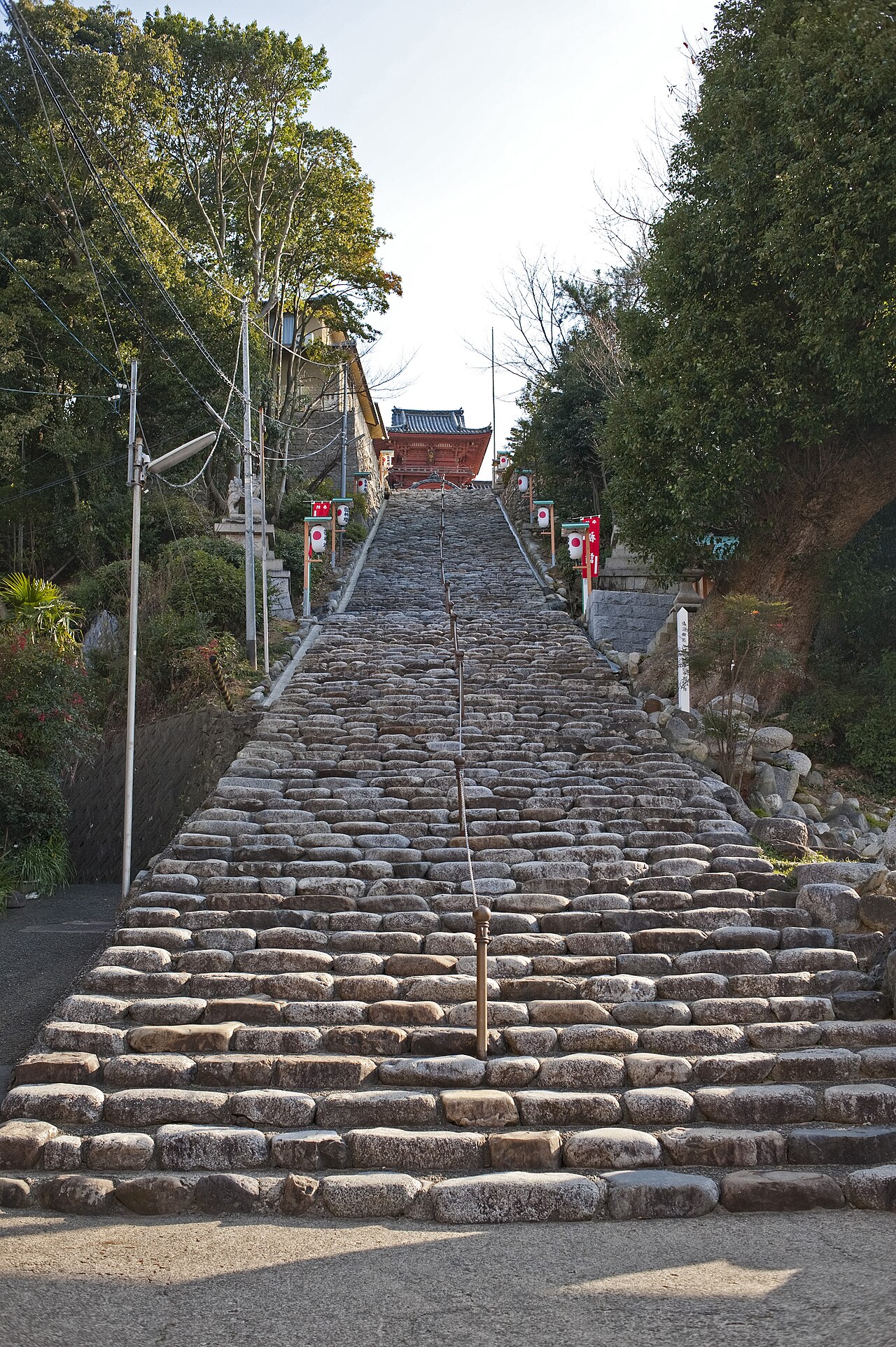
Isaniwa Shrine
Isaniwa Jinja · Dogo Hachiman · 伊佐爾波神社
overview
What this place is
Isaniwa Shrine above Dogo enshrines Empress Jingu, Emperor Ojin, Emperor Chuai and Mihashirahime-no-Okami. Its founding is stated as not known in detail, though it is related as one of the eight Hachiman shrines built at Dogo in the reign of Emperor Seiwa. The present halls were begun in 1664 and finished in 1667, and are one of three examples of the fully formed hachiman style.
- One of three examples of the fully formed hachiman style
- Halls begun in 1664 and finished in 1667
- An Important Cultural Property, extended to the whole in 1967
- A front stair of 135 steps
plan your visit
Visit facts for Isaniwa Shrine
- Access
- About 8 minutes on foot from Dogo Onsen Station. Take either the stair at the front or the route the notices on the spot set out.
- Nearest station
- Dogo Onsen Station (Iyotetsu)
- Hours
- Prayers and goshuin run from 9:00 to 17:00 and the shrine office from 9:00 to 18:00. Check the shrine’s notices on the day for limited goshuin, rites and changes to reception.
- Fees
- Ordinary worship is free. Prayers, goshuin and amulets are separate; check the offering and whether they are being received on the day.
- Parking
- Available in Japanese only: いよ観ネットは無料駐車場60台と案内しています。周辺は道後の生活・観光道路のため、指定区画と誘導に従います。
- Goshuin (seal stamps)
- Goshuin are given from 9:00 to 17:00. Limited issues and changes are posted in the shrine’s notices; check on the day.
- Typical visit
- About 45 minutes (Unmeguri's estimate, not an official figure)
- Facts checked
- 2026-10-22
background
Enshrined deities
Empress Jingu · Emperor Ojin · Emperor Chuai · Mihashirahime-no-Okami
The shrine gives Empress Jingu, Emperor Ojin, Emperor Chuai and Mihashirahime-no-Okami as its deities; what it lists as purposes is taken as the shrine’s own, and no outcome is assured.
etiquette
Visiting with respect
- The front stair has 135 steps; do not treat climbing it as what gives the visit its worth, and ask on the spot about another route.
- Do not lean on or touch the halls, which are an Important Cultural Property.
- Do not block the stair with photo queues.
- Read the founding as not settled, which is what the shrine itself states.
- Check the notices before going for a limited goshuin.
- Hours, fees and reception can change; check the official information before you go.
faq
Common questions
How do I get to Isaniwa Shrine?
About 8 minutes on foot from Dogo Onsen Station. Take either the stair at the front or the route the notices on the spot set out. Nearest station: Dogo Onsen Station (Iyotetsu).
How much does it cost to visit Isaniwa Shrine?
Ordinary worship is free. Prayers, goshuin and amulets are separate; check the offering and whether they are being received on the day.
What are the opening hours of Isaniwa Shrine?
Prayers and goshuin run from 9:00 to 17:00 and the shrine office from 9:00 to 18:00. Check the shrine’s notices on the day for limited goshuin, rites and changes to reception.
Is there parking at Isaniwa Shrine?
Parking information for Isaniwa Shrine is available in Japanese only: いよ観ネットは無料駐車場60台と案内しています。周辺は道後の生活・観光道路のため、指定区画と誘導に従います。
How long should I spend at Isaniwa Shrine?
Unmeguri's estimate for a visit is about 45 minutes. This is an editorial estimate, not an official figure.
Can I get a goshuin at Isaniwa Shrine?
Goshuin are given from 9:00 to 17:00. Limited issues and changes are posted in the shrine’s notices; check on the day.
How many steps are there?
135 at the front. Ask on the spot about another route if that is hard for you.
When were the halls built?
Begun in 1664 and finished in 1667, after the lord of Matsuyama prayed here before an archery contest.
Which deities are enshrined?
Empress Jingu, Emperor Ojin, Emperor Chuai and Mihashirahime-no-Okami.
sources
Sources and checked dates
- 伊佐爾波神社の御祭神・由緒・八幡造り|伊佐爾波神社(opens in a new tab)
- 伊佐爾波神社の現行案内・限定頒布|伊佐爾波神社(opens in a new tab)
- 御祈祷の案内|伊佐爾波神社(opens in a new tab)
- 伊佐爾波神社の交通案内|伊佐爾波神社(opens in a new tab)
- 伊佐爾波神社の石段・文化財情報|いよ観ネット(opens in a new tab)
Facts last checked on 2026-10-22. Sources are in Japanese. Unmeguri separates officially documented facts from its own editorial reading, and does not promise that any wish or outcome will be realized.