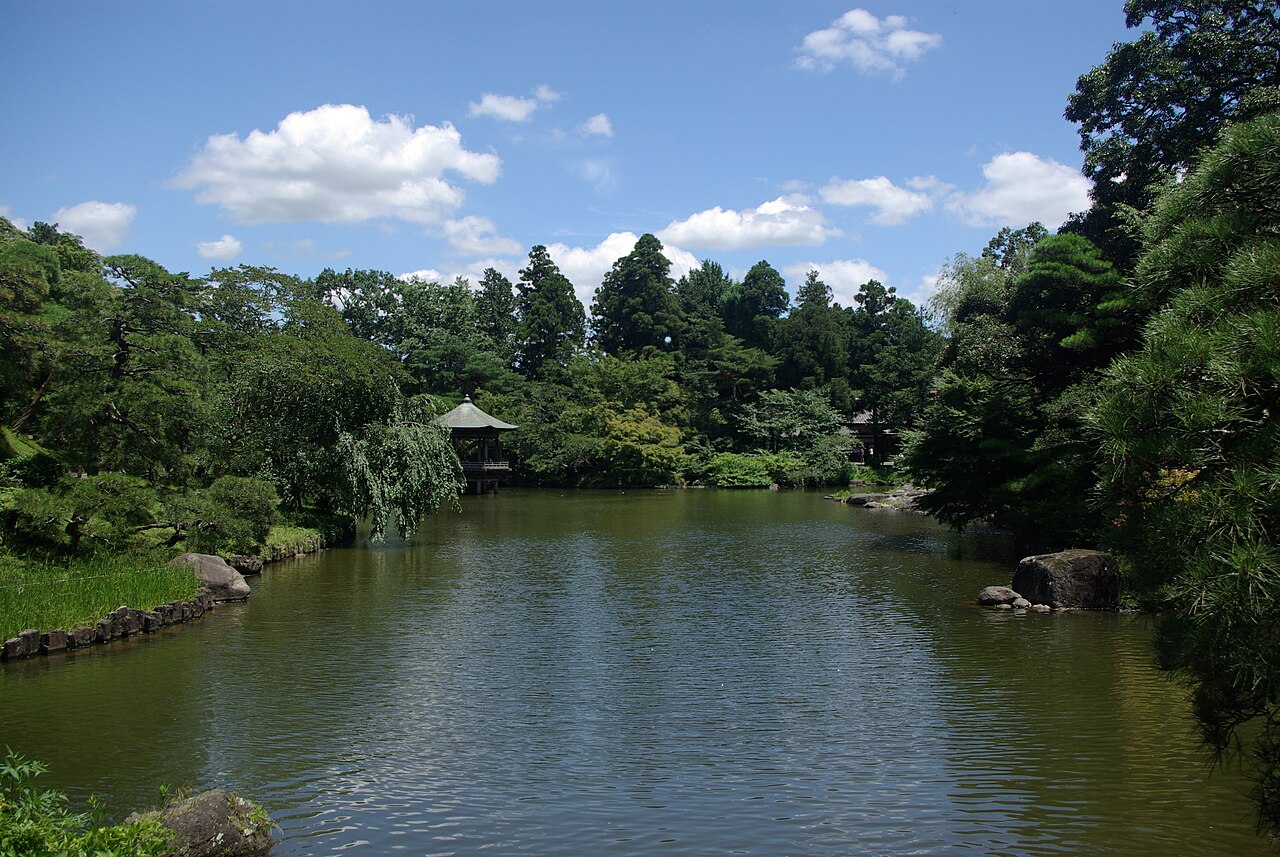
Naritasan Park
Naritasan Koen · Naritasan Temple Park · 成田山公園
overview
What this place is
Naritasan Park is a garden of about 165,000 square metres on the hillside behind the Great Main Hall of Naritasan Shinshoji in Narita, Chiba Prefecture. Completed in 1928, it holds three ponds — Monju, Ryuju and Ryuchi — a western garden below the Great Pagoda of Peace, the Yuhi waterfall, poetry monuments and a calligraphy museum. The official guidance explains that the ponds were made as places for releasing living creatures, so that the Buddhist regard for all life is built into the design of the park.
- Three ponds — Monju, Ryuju and Ryuchi — linked by paths with a floating hall
- The Yuhi waterfall, reached down a staircase among large rocks and trees
- A western garden directly below the Great Pagoda of Peace
- Plum in late winter, cherry and wisteria in spring, and maples in late autumn
plan your visit
Visit facts for Naritasan Park
- Access
- About 75 minutes from Tokyo Station by the JR Sobu Line rapid service to Narita Station, then about 15 minutes on foot through the temple grounds.
- Nearest station
- Keisei Narita Station / JR Narita Station
- Hours
- Public tourist information lists the park as open all year. Temple events, path works and related facilities such as the calligraphy museum follow their own conditions, so check before you set out and walk in daylight.
- Fees
- Walking in the park is free. Related facilities such as the Naritasan Calligraphy Museum are charged separately.
- Parking
- Available in Japanese only: 新勝寺公式アクセスは徒歩3分の駐車場3か所と市営・その他駐車場を案内。料金・空き状況は各駐車場で確認。
- Typical visit
- About 90 minutes (Unmeguri's estimate, not an official figure)
- Facts checked
- 2026-07-29
background
Central feature
Yuhi waterfall · The three ponds of Monju, Ryuju and Ryuchi · Western garden
The official guidance of Naritasan Shinshoji explains that the three ponds were made as places for releasing living creatures, so that the Buddhist regard for all life is built into the design of the park, together with the western garden, the waterfall, the poetry monuments and the calligraphy museum.
etiquette
Visiting with respect
- The Yuhi waterfall is reached down a staircase, so wear shoes that grip when the path is wet.
- The three ponds were made as places for releasing living creatures; do not chase the wildlife or take anything from the grounds.
- The park covers about 165,000 square metres, so carry something to drink and choose the parts you most want to see.
- Hours, fees and reception can change; check the official information before you go.
faq
Common questions
How do I get to Naritasan Park?
About 75 minutes from Tokyo Station by the JR Sobu Line rapid service to Narita Station, then about 15 minutes on foot through the temple grounds. Nearest station: Keisei Narita Station / JR Narita Station.
How much does it cost to visit Naritasan Park?
Walking in the park is free. Related facilities such as the Naritasan Calligraphy Museum are charged separately.
What are the opening hours of Naritasan Park?
Public tourist information lists the park as open all year. Temple events, path works and related facilities such as the calligraphy museum follow their own conditions, so check before you set out and walk in daylight.
Is there parking at Naritasan Park?
Parking information for Naritasan Park is available in Japanese only: 新勝寺公式アクセスは徒歩3分の駐車場3か所と市営・その他駐車場を案内。料金・空き状況は各駐車場で確認。
How long should I spend at Naritasan Park?
Unmeguri's estimate for a visit is about 90 minutes. This is an editorial estimate, not an official figure.
When is the best season to visit Naritasan Park?
Plum is generally at its best from mid-February to mid-March and the maples from mid-November to early December. Check the current official information for flowering and colour.
sources
Sources and checked dates
- 公園・その他施設のご案内|成田山新勝寺(opens in a new tab)
- アクセス|成田山新勝寺(opens in a new tab)
- 成田山公園|成田市観光協会(opens in a new tab)
- ウメ|成田市観光協会(opens in a new tab)
- 成田山公園|千葉県公式観光サイト(opens in a new tab)
- 成田山新勝寺|千葉県公式観光サイト(opens in a new tab)
Facts last checked on 2026-07-29. Sources are in Japanese. Unmeguri separates officially documented facts from its own editorial reading, and does not promise that any wish or outcome will be realized.