Horaiji Temple
Horaijisan Horaiji · Mt. Horaiji · 鳳来寺
overview
What this place is
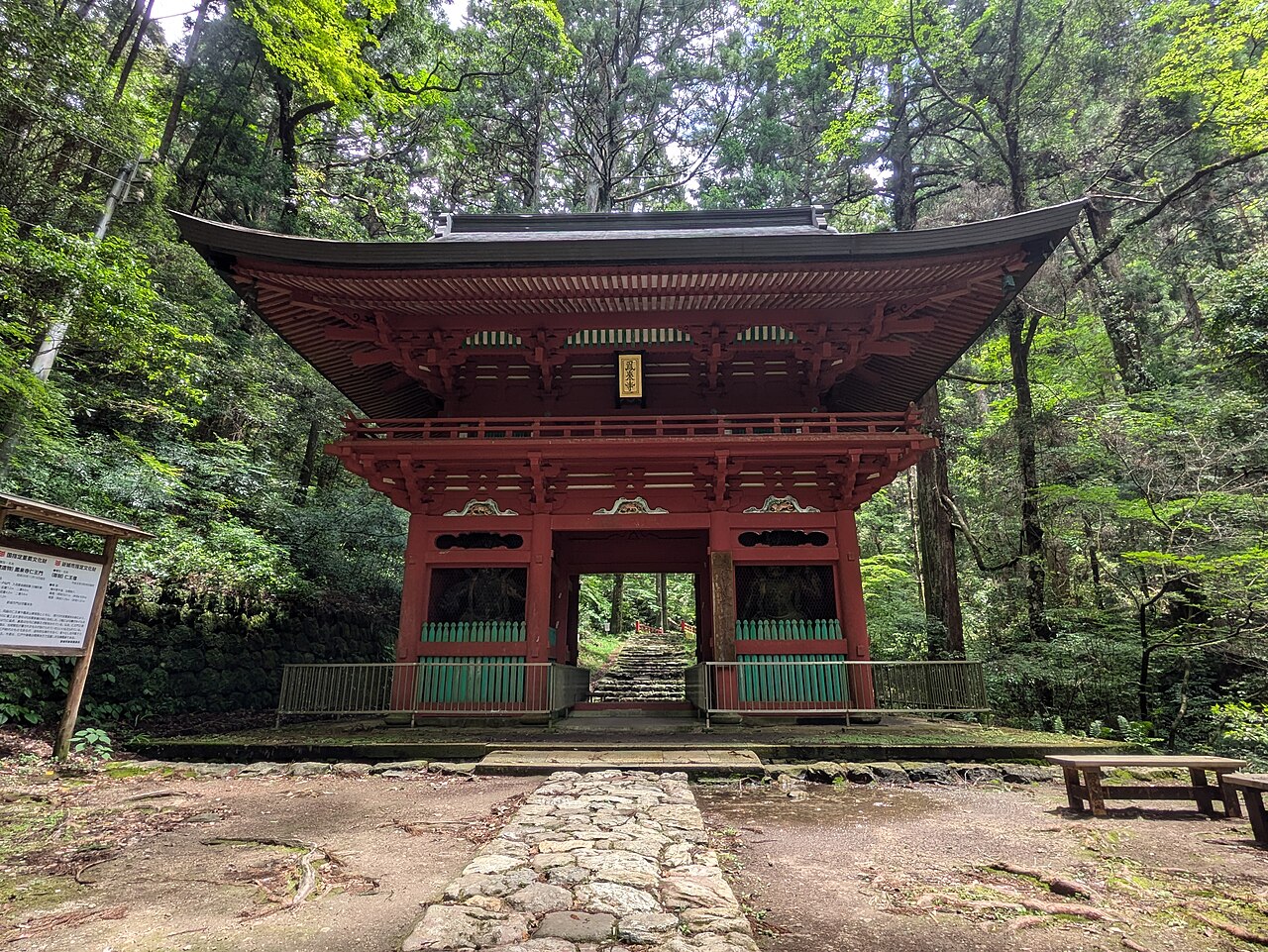
Horaiji stands on Mt. Horaiji in Shinshiro, Aichi Prefecture, and is related to have been founded by the hermit Rishu around 702 to 703, some 1,300 years ago. Its principal image is the Mine Yakushi Nyorai, said to have been carved by Rishu from a sacred tree. The old approach climbs 1,425 stone steps, with the vermilion Niomon gate given by Tokugawa Iemitsu, an Important Cultural Property, part-way up.
- The vermilion Niomon gate of zelkova with a copper roof, given by Tokugawa Iemitsu
- An approach of 1,425 stone steps from the foot of the mountain to the main hall
- The Kasasugi cedar, described as 800 years old and about 60 metres high
- A mountain designated a national place of scenic beauty and natural monument, home to the Oriental scops owl, the bird of Aichi Prefecture
plan your visit
Visit facts for Horaiji Temple
- Access
- About 155 minutes from Tokyo Station by the Tokaido Shinkansen to Toyohashi Station, the JR Iida Line to Hon-Nagashino Station and a Toyotetsu bus on the Taguchi-Shinshiro route to the Horaiji stop, then about 15 minutes on foot.
- Nearest station
- Horaiji bus stop (Toyotetsu bus)
- Hours
- The temple can be visited freely. Goshuin are listed in current tourist information as available every day from 9:00 to 16:30. The Horaijisan Parkway car park admits vehicles from 8:00 to 16:00 and asks them to leave by 17:00.
- Fees
- Ordinary worship is free. A goshuin is charged separately and the current amount is confirmed at the main hall. The parkway car park is 550 yen for a car, or 1,100 yen in the busy season, 1,100 yen for a large vehicle or 2,200 yen in season, and 220 yen for a motorcycle or 440 yen in season.
- Parking
- Available in Japanese only: 鳳来寺山パークウェイ駐車場は約90台。8:00〜16:00入場、17:00までに出庫し、普通車550円・繁忙期1,100円です。2026年7月18日から8月31日は行者越の登山者用無料駐車場が開放予定ですが、本堂まで30分以上の山道で、軽装不可、パークウェイ駐車場との間の歩道なし県道は徒歩禁止です。県道32号の通行止めと迂回路も当日再確認します。
- Goshuin (seal stamps)
- Current tourist information lists goshuin every day from 9:00 to 16:30. The main hall, the Horaisan Toshogu and the natural history museum are separate places with separate desks.
- Typical visit
- About 150 minutes (Unmeguri's estimate, not an official figure)
- Facts checked
- 2026-10-22
background
Principal image
Mine Yakushi Nyorai
The principal image is the Mine Yakushi Nyorai, related to have been carved by the hermit Rishu from a sacred tree, and long the object of prayers for recovery from illness and for protection from misfortune. The temple is also linked to the tradition that Matsudaira Hirotada and Odai-no-Kata prayed here for a child, later Tokugawa Ieyasu.
etiquette
Visiting with respect
- The Niomon gate is an Important Cultural Property given by Tokugawa Iemitsu; do not touch the gate, the guardian figures, the mesh, the plaque or the carvings, or block the middle of the gate for a photograph.
- The plaque on the front of the gate is a replica made during repairs, based on one attributed to Empress Komyo; it is not the original.
- The faith in Yakushi Nyorai for recovery, the recovery of Emperor Monmu and the prayer for a child are matters of belief and tradition, and do not take the place of a diagnosis, treatment or a consultation.
- The old approach is 1,425 steps and the Niomon is part-way up; moss, rain, fallen leaves, ice, heat and darkness are all reasons to turn back.
- The parkway car park and the Gyojagoe car park have different conditions, and the prefectural road between them has no footway and must not be walked.
- Part of prefectural road 32 was closed by a landslide as of 16 July 2026; check the diversions and whether it has reopened on the day you visit.
- Hours, fees and reception can change; check the official information before you go.
faq
Common questions
How do I get to Horaiji Temple?
About 155 minutes from Tokyo Station by the Tokaido Shinkansen to Toyohashi Station, the JR Iida Line to Hon-Nagashino Station and a Toyotetsu bus on the Taguchi-Shinshiro route to the Horaiji stop, then about 15 minutes on foot. Nearest station: Horaiji bus stop (Toyotetsu bus).
How much does it cost to visit Horaiji Temple?
Ordinary worship is free. A goshuin is charged separately and the current amount is confirmed at the main hall. The parkway car park is 550 yen for a car, or 1,100 yen in the busy season, 1,100 yen for a large vehicle or 2,200 yen in season, and 220 yen for a motorcycle or 440 yen in season.
What are the opening hours of Horaiji Temple?
The temple can be visited freely. Goshuin are listed in current tourist information as available every day from 9:00 to 16:30. The Horaijisan Parkway car park admits vehicles from 8:00 to 16:00 and asks them to leave by 17:00.
Is there parking at Horaiji Temple?
Parking information for Horaiji Temple is available in Japanese only: 鳳来寺山パークウェイ駐車場は約90台。8:00〜16:00入場、17:00までに出庫し、普通車550円・繁忙期1,100円です。2026年7月18日から8月31日は行者越の登山者用無料駐車場が開放予定ですが、本堂まで30分以上の山道で、軽装不可、パークウェイ駐車場との間の歩道なし県道は徒歩禁止です。県道32号の通行止めと迂回路も当日再確認します。
How long should I spend at Horaiji Temple?
Unmeguri's estimate for a visit is about 150 minutes. This is an editorial estimate, not an official figure.
Can I get a goshuin at Horaiji Temple?
Current tourist information lists goshuin every day from 9:00 to 16:30. The main hall, the Horaisan Toshogu and the natural history museum are separate places with separate desks.
How many steps are there?
The old approach has 1,425 stone steps, with the Niomon gate part-way up. Turning back at the gate is a complete visit.
Can I reach the main hall without the steps?
Ask the temple. Tourist information states there is no lift, escalator or ramp; the approach from the parkway car park side is the alternative to the steps.
sources
Sources and checked dates
- 鳳来寺仁王門|新城市(opens in a new tab)
- 歴史深い鳳来寺を巡る|新城市(opens in a new tab)
- 鳳来寺から始まる家康の生涯|新城市(opens in a new tab)
- 鳳来寺山パークウェイ駐車場|新城市(opens in a new tab)
- 鳳来寺(本堂・鐘楼・仁王門)|キラッと奥三河観光ナビ(opens in a new tab)
- 鳳来寺|あいち歴史観光(opens in a new tab)
- 愛知の御朱印特集|Aichi Now(opens in a new tab)
- 鳳来寺山・鳳来寺|Aichi Now(opens in a new tab)
Facts last checked on 2026-10-22. Sources are in Japanese. Unmeguri separates officially documented facts from its own editorial reading, and does not promise that any wish or outcome will be realized.