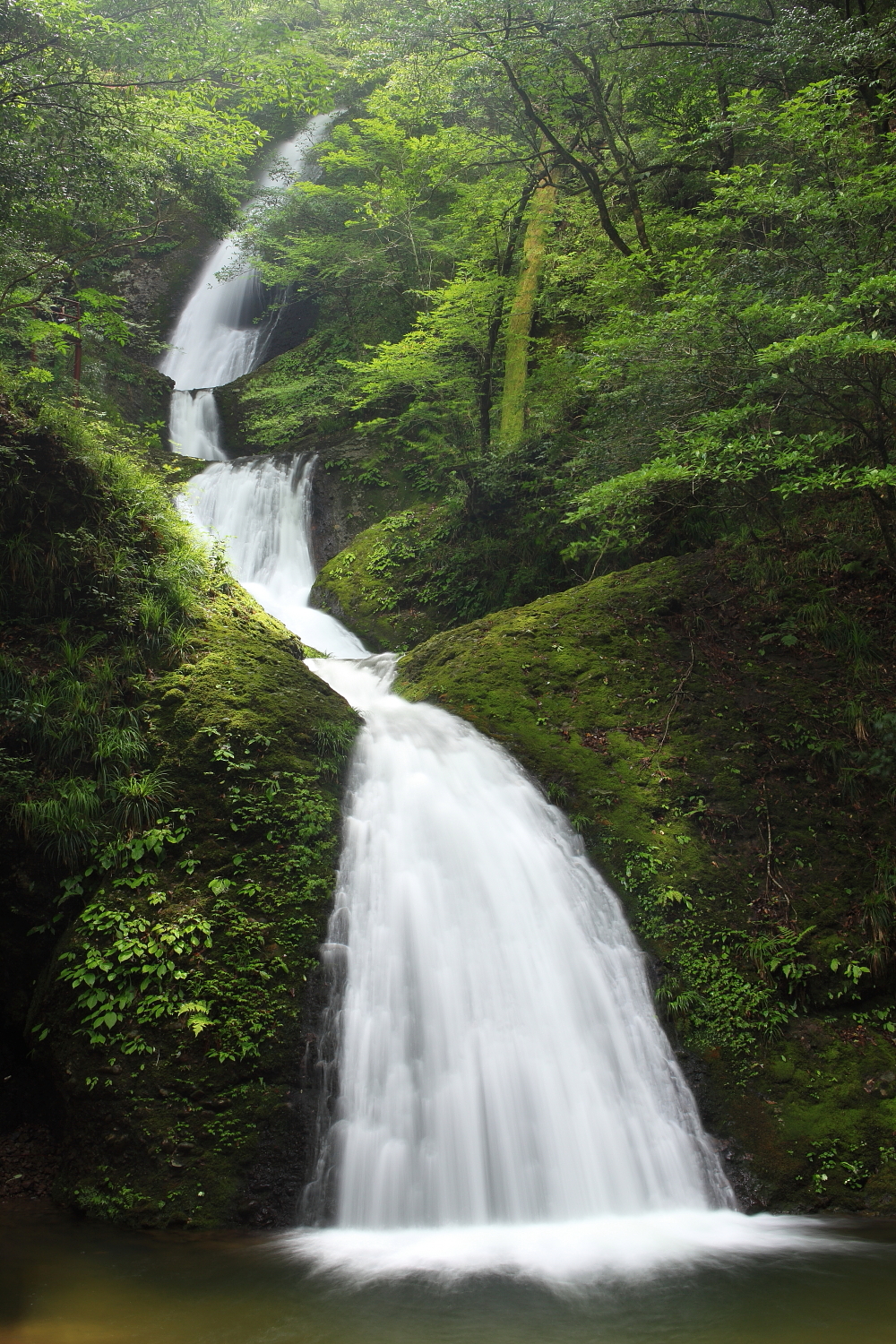
Atera Seven Falls
Atera-no-Nanataki · Atera Falls · 阿寺の七滝
overview
What this place is
The Atera Seven Falls in Shinshiro, Aichi Prefecture, drop in seven stages down a conglomerate fault scarp from the Suyama plateau, 62 metres in all. From the bottom the stages measure 9, 13, 7, 25, 2, 4 and 2 metres, and only the first four can be seen looking up from below. The falls and about 9.1 hectares around them were designated a national place of scenic beauty and natural monument on 22 January 1934.
- The first four stages, seen looking up from the foot of the falls
- Potholes in the plunge pools, given as 4 metres deep at the second stage and 7 metres at the fifth
- A fault scarp of conglomerate made of rounded sandstone, mudstone and granite pebbles
- A path from near the falls up to a higher viewing point
plan your visit
Visit facts for Atera Seven Falls
- Access
- About 155 minutes from Tokyo Station by the Tokaido Shinkansen to Toyohashi Station and the JR Iida Line to Mikawa-Ono Station, then a Shinshiro S-bus on the Akiha-Nanataki route to the Nanatakiguchi stop and about 15 minutes on foot.
- Nearest station
- Nanatakiguchi bus stop (Shinshiro S-bus) / Mikawa-Ono Station
- Hours
- The area itself is open all year and the shop trades only at weekends from April to November. Prefectural road 442 has been listed as passable but can be closed again after heavy rain, so check the path, the viewing points and the road on the day and come in daylight.
- Fees
- Seeing the falls is free. Current local information gives parking at 100 yen for a motorcycle, 300 yen for a car, 1,000 yen for a minibus and 1,500 yen for a coach. The S-bus is 200 yen a ride, 100 yen for primary pupils and below, and half for a disabled passenger and carer on showing a certificate.
- Parking
- Available in Japanese only: 奥三河観光ナビは約120台・有料、Aichi Nowは150台と案内が分かれています。約120台を保守的な目安とし、空車を保証しません。県道442号は豪雨等で再規制され得るため、地図アプリだけで判断せず現地案内を優先します。普通車の現行表示は300円です。
- Typical visit
- About 75 minutes (Unmeguri's estimate, not an official figure)
- Facts checked
- 2026-10-22
background
Central feature
The seven-stage falls · The potholes in the conglomerate · The Kodakiishi stone and its tradition
The Atera Seven Falls carry water from the Suyama plateau down a conglomerate fault scarp in seven stages, 62 metres in all. The large potholes cut by the water and the stones it turned are of scientific interest. The conglomerate below the falls carries the tradition of the Kodakiishi stone, and a legend that Abe no Seimei trained here in his youth; both are told as stories.
etiquette
Visiting with respect
- The tradition of the Kodakiishi stone, the legend of Abe no Seimei and the label of a power spot are told in tourist information as stories; keep them apart from historical fact and from any claim about health.
- Do not treat having a child as a matter of luck, faith, effort or the number of visits, and do not let it interrupt treatment, medication or a consultation.
- The plunge pools are deep potholes; stay outside the fences and ropes, do not look over from the rocks, and keep children within sight.
- Prefectural road 442 can be closed again after heavy rain; follow the signs on site and current information from the town rather than a map application alone.
- Parking capacity is given as 120 in one official source and 150 in another; a space is not assured, and do not park on the road or on private land.
- The S-bus does not run every day; check the return service and the Iida Line at Mikawa-Ono as you set out.
- Do not damage the conglomerate, the plants or the stone said to be the Kodakiishi, and carry your rubbish home.
- Hours, fees and reception can change; check the official information before you go.
faq
Common questions
How do I get to Atera Seven Falls?
About 155 minutes from Tokyo Station by the Tokaido Shinkansen to Toyohashi Station and the JR Iida Line to Mikawa-Ono Station, then a Shinshiro S-bus on the Akiha-Nanataki route to the Nanatakiguchi stop and about 15 minutes on foot. Nearest station: Nanatakiguchi bus stop (Shinshiro S-bus) / Mikawa-Ono Station.
How much does it cost to visit Atera Seven Falls?
Seeing the falls is free. Current local information gives parking at 100 yen for a motorcycle, 300 yen for a car, 1,000 yen for a minibus and 1,500 yen for a coach. The S-bus is 200 yen a ride, 100 yen for primary pupils and below, and half for a disabled passenger and carer on showing a certificate.
What are the opening hours of Atera Seven Falls?
The area itself is open all year and the shop trades only at weekends from April to November. Prefectural road 442 has been listed as passable but can be closed again after heavy rain, so check the path, the viewing points and the road on the day and come in daylight.
Is there parking at Atera Seven Falls?
Parking information for Atera Seven Falls is available in Japanese only: 奥三河観光ナビは約120台・有料、Aichi Nowは150台と案内が分かれています。約120台を保守的な目安とし、空車を保証しません。県道442号は豪雨等で再規制され得るため、地図アプリだけで判断せず現地案内を優先します。普通車の現行表示は300円です。
How long should I spend at Atera Seven Falls?
Unmeguri's estimate for a visit is about 75 minutes. This is an editorial estimate, not an official figure.
Does it cost anything to see the Atera Seven Falls?
Seeing the falls is free. Parking is given as 300 yen for a car, and the S-bus is 200 yen a ride.
How do I get to the Atera Seven Falls?
About 155 minutes from Tokyo Station via Toyohashi to Mikawa-Ono Station, then a Shinshiro S-bus to the Nanatakiguchi stop and about 15 minutes on foot.
Can I see all seven stages?
No. Looking up from the foot of the falls you can see the first four stages. The city states this plainly, and a higher viewing point is reached by a path.
sources
Sources and checked dates
- 阿寺の七滝|新城市(opens in a new tab)
- Sバス秋葉七滝線|新城市(opens in a new tab)
- 新城市の地域資源 阿寺の七滝|愛知県(opens in a new tab)
- 奥三河探訪 新城市で滝巡り|愛知県(opens in a new tab)
- ATERA GREEN ACTION|愛知県(opens in a new tab)
- 阿寺の七滝|キラッと奥三河観光ナビ(opens in a new tab)
- 阿寺の七滝|Aichi Now(opens in a new tab)
Facts last checked on 2026-10-22. Sources are in Japanese. Unmeguri separates officially documented facts from its own editorial reading, and does not promise that any wish or outcome will be realized.